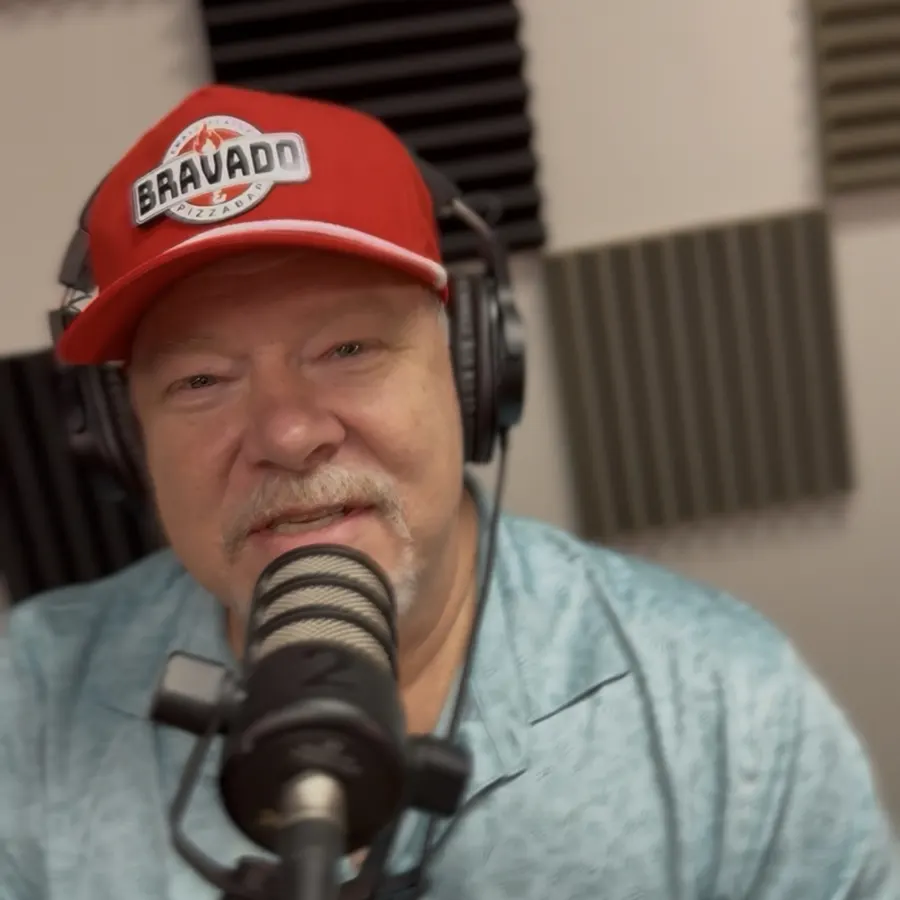
Kelly Black, owner of POP Hospitality, joins Brandon Styll and Vince Lanni for a wide-ranging conversation about his unlikely path from Columbia Records songwriter to Nashville restaurateur. Kelly shares stories from his music days writing for Diamond Rio and co-writing with Craig Wiseman, why he pivoted to pizza with Pie in the Sky in 2001, and how he has since built a portfolio that includes The Row, Treehouse, The Nash House, and his newest concept, Bravado in Cool Springs. The conversation digs into the realities of restaurant financing, why banks treat the industry as a blacklist category, and how aggregated margin loss is squeezing operators between rising costs and consumers who resist menu price increases. Kelly and Brandon also talk candidly about ADHD, leadership, team culture, the GLP-1 and small-plates dining shift, and why Nashville's future may belong to neighborhood concepts rather than downtown. Before the interview, Brandon spends time urging operators to never sign a vendor contract without having NARA review it first, and highlights CORE's Groceries with Gratitude program for restaurant families in need.
“Everybody begged me not to do it. I had worked in pizzerias and I recognized that Franklin was a pizza desert. Pretty much straight up.”Kelly Black, at 32:10
Key moments
CORE's Groceries with GratitudeBrandon explains how CORE and Sysco are helping food and beverage families cover holiday groceries and how to apply or sponsor.
Never Sign That Vendor ContractBrandon's late-night rant on predatory linen, CO2, and tech contracts, auto-renewals, and how NARA is now redlining deals for members.
Acting Like a 120-Restaurant ChainHow pooling visibility across NARA members is leveling the playing field against chains on pricing and margin.
Meet Kelly Black and POP HospitalityKelly introduces The Row, Treehouse, The Nash House, and new concept Bravado, and reflects on 25 years in Nashville restaurants.
From Columbia Records to Pizza OvensKelly's path as a Nashville songwriter, his Diamond Rio cut Holdin', and why royalty economics pushed him to diversify.
Why Pie in the Sky HappenedSpotting a pizza desert in Franklin, a sweaty lunch with Hall of Fame songwriters, and the decision to open a restaurant as a hedge.
What Bankers See in RestaurantsWhy restaurants are a blacklist category to underwriters and how operators have to divorce passion from the math to survive.
Opening Bravado at 58Kelly on working seven days a week and two shifts a day to launch Bravado, plus the systems and positive reinforcement it takes.
Treehouse, Small Plates, and GLP-1 DinersHow Treehouse grew 40 percent by shifting to small plates and why Bravado brings that format to Cool Springs.
What Bravado MeansKelly on naming the concept after the daredevil, overconfident energy it takes to work in hospitality.
The Steve Dale Tamale StoryWhy Kelly thinks road musicians make great restaurant operators: thankless, competitive, and used to being kicked.
Building The Row with Garrett PittlerFlipping Pie in the Sky Midtown into The Row, inventing new Southern dishes, and how Blake Shelton's team later borrowed the playbook for Ole Red.
Losing Blake Shelton Over a BoothThe Harlan Howard booth, a Gen Z host who didn't recognize Blake and Gwen Stefani, and the risk of unrecognized VIPs.
Aggregated Margin LossKelly and Brandon on insurance up 40 percent, property taxes up 50 percent, and why menu prices can't keep pace.
Why Kelly Doesn't Chase the BarFood-first philosophy, the liability of late-night bars, and the Agave wrongful-death cautionary tale.
Broadway Bar EconomicsVince shares how downtown bars engineer dance floors, last calls, and bartender placement to maximize spend from tourists.
Where Nashville Goes NextKelly argues the best food is moving to East Nashville, Germantown, The Nations, WeHo, and reimagined suburban spaces as downtown prices out independents.
Choose Local, Vote With Your WalletBrandon makes the pitch for diners to use naranashville.com and support independents over chains and PE-backed concepts.
Full transcript
Running a restaurant is tough. Staff turnover, rising costs, and the endless tasks that bog you down and take you away from what you love. Let Adams-Keegan lighten that load. Their privately held Tennessee-based restaurant and hospitality-focused outsourced HR, payroll, and benefits firm. The team at Adams-Keegan removes the administrative burdens of HR administration, payroll benefits management, garnishments, unemployment claims, compliance, 401k, and so much more. From their proprietary HRIS platform to seamless payroll and competitive benefits that keep your team smiling, they've got you covered. Adams-Keegan lets you focus on what you do best, creating unforgettable dining experiences, while they handle the rest. Essentially, think of Adams-Keegan as your back office HR department, right here in Music City. One of the many things I love about Adams-Keegan is that unlike big publicly traded companies out there, they have an incredibly high standard of customer service. And that's what we all need, is really good customer service in these areas. They don't give you a 1-800 number and make you fill out an IT ticket submission. They surround every client with a team of experts, all based right here in Tennessee. You can call them today at 615-627-0821 or visit Adams-Keegan.com. That's A-D-A-M-S-K-E-E-G-A-N.com for your free HR consultation and see how they can create a customized solution to help your restaurant thrive. Welcome to Nashville Restaurant Radio, the tastiest hour of talk in Music City. Now here's your host, Brandon Styll.
Hello, Music City, and welcome to Nashville Restaurant Radio. My name is Brandon Styll, and I am your host. I'm joined here with Vince Lanni. Hi, Vince. Hey, what's up? Hey, we are powered by Pepsi-Cola. Super excited to have you guys here today. Fun episode today, Kelly Black. Yeah, yeah, that was a good episode. Kelly is the owner of Pop Hospitality, which is the row over, I said it was Hay Street, but it's actually Lyle Street, Tree House in East Nashville, the Nash House Southern Spoon and Saloon, and the all-new Bravado. There you go, is that Bravado? Bravado. In the musical sense of the word. I don't know. I don't know. It's Bravado. He's the founder of Pie in the Sky Pizza, if you remember Pie in the Sky Pizza.
I do remember Pie in the Sky Pizza. Yeah, and so he tells the story of why Pie in the Sky today. Also, he's a veteran of the industry, but he's a songwriter. He was a songwriter in the music business, so lots of fun songwriter stories today. I mean, it's Nashville, so we got to hit music and food, and they're all big parts of the city. I completely agree. I talk about that in the episode, why I feel like the two intersect so well. It's why we've had different musicians on the show, and I think my favorite musician was probably Montel Jordan back in the day. You weren't in that episode, but it was a lot of fun. Or Layla. Or Layla Vartanian. We've had Jeremy Lister on the show. I want more musicians. I think more musicians. I think there's a fun intersection there for Nashville restaurant radio for that sort of a thing. So he was our first interview in the new studio, and where we are now, a lot of fun.
You'll see video snippets of this one coming out. Wait till you see it. Yeah, wait till you see it. Couple things. We have a little bit of house cleaning. Do want to talk about something from a cool non-profit, CORE, Children of Restaurant Employees, is what that stands for, C-O-R-E. They have a new program. So CORE and Cisco are bringing back their Groceries with Gratitude program for its second year. Very cool. What is Groceries with Gratitude? That's a great question. Groceries with Gratitude supports the families of food and beverage employees in financial need. So it's not like they're just giving you money. Your sponsorship or personal donation will help fund gift cards to provide holiday groceries to feed a family of at least five meals. So feeding a family five meals. I think they give you gift cards to grocery stores who can go and shop and buy food for their families. If you're interested in sponsoring Groceries with Gratitude or know of a food and beverage family who might be in need, please visit the CORE website at coregives.org.
That's a cool program. Food costs go up everywhere in restaurants and in grocery stores and it can impact people. This is the time of year where you're spending more. People invite you to a party and you got to bring something and there's a lot of pressure. If you're not doing that well financially, that can really be hard on you to feel like you have to bring something and you don't have the budget for those groceries or you're struggling just to feed your family. You're trying to make ends meet and you're behind on bills and you're like, how am I going to feed my children this week? That's something that CORE wants to help you navigate this holiday season. I would bet too that groceries maybe seasonally go up in price this year. I don't know the market, but that would make sense to me because more people are going to be buying for holidays so the prices inflate a little bit maybe. Yeah, that's a thing. Well, I know all primal cuts of meat, all your fillets, all of your strips and ribeyes, all prices go through the roof because that's what everybody eats during the holidays. If you're a restaurant owner out there and you're looking at how you're going to navigate the holidays, the auxiliary cuts of meat, sirloins, skirt steak, flank steaks, all these other steaks, their prices go down on. If you can find an alternate meat with your holiday menus, that definitely can help. If you're at home, those prices go down.
If you want to eat fillet, that's going to be up this holiday season. It always is. Yeah, shop the deals and ask for help if you need it. One thing I do when I go to bed at night is I have to turn my brain off because my brain just doesn't do that naturally. I'll play solitaire or something, but the last three episodes I've done, I've laid in bed and I've thought, I need to talk about this because this is a NARA thing and this is something that I really want to get out there for people to understand. And it has to do with contracts. If you are out there, there's a lot of people that have you sign contracts. If it's a linen company, a dish machine, chemical company, a technology company, whatever it is, I implore you, don't sign a contract until you call us. We have so many people that we visit on a, and you can tell me if I'm crazy, how many people that we sit down with and we go, let's talk about your linen company, and they go, oh, we hate them. And I go, okay, they just came in and they just said, hey, we'll do this for you if you re-sign your contract, even if it's CO2, whatever it is.
What's happening now is we are organizing. We have NARA, we have 120 members now. We are seeing what everybody's paying and we are going in and we're helping them negotiate better deals. We're redlining contracts, we're making sure the contracts are beneficial for the people. But also we see everybody's contract, we hold the contracts for them, we make sure that they're not auto-renewing. We do not want a contract to ever auto-renew. We want to renegotiate that contract. So the people who sign these contracts have got word of this and they're going in as fast as they can to get you to re-sign contracts so that you can't get out of your current contract. Do not sign a contract before you call us. That is such a major thing right now that people are trying to figure out how do we get these people locked into something they can't get out of. And I'm sure if you're listening to this right now, you're going, oh, I know I'm in a contract right now with this XYZ company and it's driving me crazy. Just auto-renewed or we missed it. What sometimes they'll do is they'll offer you a discount, but it adds another year on your term or something like that, which is then an inflated price. And you think you're getting a good deal. Oh, I've negotiated a good deal. Chances are it's not a good deal. Chances are we're seeing these all the time. We're like, I'm thinking, why would you sign this?
I mean, they're specifically offering it to the independents because they know they can take advantage because you're busy. You're doing other things. You're not going to read a 10, 20 page document. That's what we're here to help with. What are you comparing it against? You think it's a good deal because these people are predatory and they know that you're not calling five other restaurants to see what those restaurants are getting. Hey, what does your contract look like? You're looking at it. You're saying, okay, that's better than what I'm currently paying. But if you're currently paying 50% more than everybody else and they're offering you 40% worse than everybody else, you think that's a good deal because it's better than what you did. We need to look at that to go- It's like the Black Friday savings, right? When the prices are the regular price, but they just say on sale. When you inflate prices to discount them during a time- That's what everyone does to the independent restaurants. It happens. When you're buying from different vendors, that's the same thing. You're just getting a discount on an already inflated price. 100%. Yeah. This is where we're seeing the most traction when it comes to helping small restaurants and some large restaurants is that we have a visibility. Now, we have NDAs and we can't share with anybody any specific pricing.
That's not what we're doing, but we know. We now know where you need to be in the market. Versus having to call five other restaurants, we're looking at 100 other restaurants and we're leveling the playing field. If you are out there and you have a contract put in front of you, do not sign it before you call us to look at it, especially if you're a NARA member. If you're not a NARA member, give us a call. We'd love to sit down and talk to you about what you're currently doing and how you're doing it because we're just seeing a lot of people coming to us going, dude, thank you. Thank you for this. This is amazing. We almost signed that and we would have been in a bad place. A lot of our vendors that we use don't even have contracts. We can do the same deal, if not better deal, without a contract. Yeah. Even if they do, the ones that do have contracts, they're really easy to work with. We can lock you in somewhere that's- It's also beneficial to get some of those contracts when it's a really good deal. If it's a really good deal, there are contracts, especially for our broadline vendors that we're assigning that are great deals.
Yeah. You want to be locked in. You want to be locked into these kinds, but we know it's a great deal because, again, we have a perspective and a vision that we can see. The fact that we're organizing now and local restaurants have a benchmark of where they should be and we know what some people have and some people don't, what we don't want to have is, oh, we're getting good margin in that account. No. We want you to get a fair margin. Yeah. The vendor to get a fair margin. Yeah. We're acting right now as a large chain. We're acting as 120 restaurant chain that we're able to negotiate deals on that kind of volume. If you're not on that kind of volume, that's where we're really seeing success. Yeah. That's the biggest competition is the chains coming in that are paying pennies on the dollar and stuff. They're getting this because they're operating like a chain. They buy a certain way. You can do now. It's a thing. That's the thing that we get that most people are like, this is amazing. This was the dream. We want to help restaurants be more sustainable.
I mean, we've seen some people that are doing this with us that didn't think they had enough volume to do something like this too, but they do. The thing is that you have prime costs, right? Your prime costs, your labor, your food, and your liquor, beer, wine. That makes up roughly, it should be about 60%. We're seeing people at 70, 72%. That's not good. It needs to be about 60%. These other brands that are on that controllable line in your P&L, that are the 1%, the smaller ones, you don't typically focus on those because it's only 1.5%, but if you could make that 1.5%, 0.8%. Yeah. I mean, if there's 10 vendors eating up 1%, but they're actually eating up 1.1%, that's a whole extra percent. Yeah. I mean, we're finding these things all over the place. It's these little things that you don't necessarily think about that we're hyper-focused on. I lay in bed at night and I'm like, I need to talk about contracts because every time we walk into a new restaurant and we're like, great, let's look at what are you locked into? What do your contracts look like right now?
It's like, oh, we just signed this extension. I'm like, why did you sign that extension? It just cost you 20 grand. And I would love to have not had you pay that extra 20. What you could do with $20,000 is amazing. I mean, for a restaurateur that's struggling right now, that's a big deal. I mean, one of the areas was we're seeing it with 312 Pizza. Just these little things that we're able to help them. You get some business in there and it really helps them a lot on top of the fact that they're saving a bunch of money on a lot of the items they're buying is huge for them. And hopefully it's going to keep them in business for a while. And we're really excited. And that's another thing. We have an amazing partner in CMB Linen and their parent company has a suite at the arena. They let us go there and we bring... Yeah, so if you see my Instagram with all these pictures in a suite, I'm not rich and have a suite that I invite all my friends to. No, but this is our Linen company. It was like, hey, our parent company has this suite and we'd love to bring local restaurant owners in there. So we've been able to bring... We had, I think, seven or eight restaurants in there last week.
Yeah. Yeah, it's pretty cool. It was so cool because we know all these people. We've been in their restaurants, working with them, but bringing them all into this one little room and saying, oh, this is Cody from Bobbo and this is Don and Tony from Gordo's. And oh, this is Tunji, he owns Steamboys. And introducing all these people together, like, oh man, I love your... And just, it was almost like it was a really cool NARA Connect event, but there's also a hockey game happening. Yeah, yeah, yeah. It was like you turn around and Bill from Shotgun Willys is talking to Tunji and they're in the corner talking about all these different things. And then it was just really neat to see that we love doing those sort of things. And that's kind of the fun thing that we get to do here at NARA. So I think we're still on a wait list, but it's like one or two restaurants. I mean, we're almost cleared the wait list. So don't think... Yeah, if you go and we will probably get to you towards the end of the month, so...
I mean, well, yeah, it's real... We're getting to them a lot faster. We now have somebody who's doing scheduling for us and putting it on the calendar. So we can get to you pretty quickly. Like in the next week or two, we will be in your restaurant to sit down and talk to you, find out what we can do. If you're out there, go to naranashville.com. You can see a full list of all of our members. And if you're a diner, if you're somebody who likes to go out to eat and you want to support local, we want to encourage you to go to naranashville.com and choose one of those restaurants. Choose one of those restaurants where you're going to go eat, because we saw it with 312 Pizza. When the neighborhoods show up, when people show up, when they start choosing local... I mean, the Sweet Family, Aras and Kim and Mimi. I mean, like... And Mimi was at the game the other day. And Mimi was at the game. And, you know, but like she's at the restaurant all the time. Like this is a family-run business that needs your support. And when the community showed up to support them, it was everything. They're still going. And they were going to close on Labor Day. Yet, here we are today. I want them to still be open when like Mimi's old enough to wait tables there. Yeah. Full circle. You know, that'd be so cool. That's like our mission here at NARA is how do we help these things continue? And it's through little things like contracts, reviewing them, making sure that they're in your best interest is how we're doing this. So reach out. Go to naranashville.com. There's a button you can click on there that says, hey, join NARA. We'd love to have you if you're a vendor. We're not really bringing on more vendors right now. Yeah, we're kind of at capacity. But I mean, hey, reach out. I'm not afraid if it's something that we really need.
Yeah, we can get you on a waitlist for that too. Yeah, we can certainly do that. We're focused more on restaurants right now. And really, we have almost 30 vendors. So we're crushing it there. And these vendors are awesome people. You'll hear about them in our advertising in this episode. Anybody who's an advertiser on the podcast is also a NARA-approved vendor. These are people that we've vetted that we love that are good friends of ours. I want to talk about a new vendor that we have that you out there, we just heard him, Jonathan Butler, on the podcast. He was just on as JB. Gold Drop Vodka is a brand new Nashville-based vodka. It's made in France. Amazing cost structure. We need you to put it on the menu. We want to show this brand an amazing return. So if you are a NARA member or if you're anybody, go to liquor store, purchase Gold Drop Vodka. If you'll listen to the episode, I mean, apparently you can't get hung over drinking this stuff. I think that sounds like a challenge, but I won't know. In my day, I would have accepted that challenge. In my day, we probably do a whole podcast. Every four minutes, we're going to do a shot and see what happens. If you're a guest on the show, we have cold bottles here. We'd love for you to taste it in our new green room. We have a bunch of mixers from Pepsi. You can mix it with whatever you like, like vodka Mountain Dew. I was just going to say it's a vodka Mountain Dew. It's like a vodka Red Bull, but just a little bit better. Instead of Red Bull, you can have a vodka Celsius with a lot more delicious flavors. You're a big Celsius guy. I am a big Celsius guy. Well, we love having Pepsi as our presenting sponsor. They have been absolutely amazing. A lot of people are going over to Pepsi. We're going to convert this whole city into a Pepsi city. I was already a Pepsi guy. It didn't take much for me because I came from Pepsi.
Everywhere else is Pepsi. It's just like the South, it's not. It's wild how it does like that. Hey, we've been talking for almost 18 minutes. We talked for over an hour on this episode, fun episode with Kelly Black. Let's just jump right in. Thank you for listening to our whole conversation. Hopefully, this is beneficial to you. You heard this and you're like, I'm going to call them before I sign this contract because you need to. It could save you thousands and thousands of dollars just from having us look at it. Put that at the top of your to-do list. Income generating, savings generating activities, top of your to-do list every day. I hear all the time. We just need to save. We need to make more money. We need to make more money. It's like, so stop doing the things that are prohibiting you from making money. A lot of it is signing these contracts that you don't need to sign the way that they're written because they're not written to your advantage. I can sleep better tonight knowing that I've said this out loud on the show. I've had a good night. I've had a good week this week. Fall break, the kids, it's been fun. Kelly Black, we're going to jump in right now. You are listening to Nashville Restaurant Radio. Super excited today to welcome you to a brand new episode of Nashville Restaurant Radio. Welcome into the Minuteman Press Studio. Brand new studio for us, Vince.
New studio. It's awesome. I had to drive all the way to Franklin today. Kelly Black is the owner of Pop Hospitality. If you don't know Pop Hospitality, that is the row over a Hay Street. It is the Treehouse, the Nash House, Southern Spoon and Saloon, and the all new Bravado. That's right. Bravado. Bravado is a small plates and pizza bar right in Cool Springs. If you don't know where that is, if you don't know where Cool Springs is, but you were the mind behind Pie in the Sky Pizza. That's correct. That old Cool Springs location is where Pie in the Sky Pizza was. I built that location out in 2003. Not to say I need to date myself like that, but yeah. How long have you been doing the restaurant gig in Nashville? We opened our first Pie in the Sky on Mayfield Drive, which is now the Minios, that's off of Carothers. It's a little pizza place. That was our first Pie in the Sky. We built that space out in 2000. We opened February of 2001.
Wow. You're 25 years into this business. Just been one big happy blur. Are you just a glutton for punishment? I don't know what it is about hospitality personalities where we like the action and the rush and the people and the enigmas of fixing things and dealing with unsolvable problems. We hate money and like to throw it down. You know the drill. You've had to fix things. Hey, this whole studio audience jumped in there. That's nice. They're enjoying the sitcom vibe. Yeah, it's a thing. The personality of doing all that, I don't know. It's one of those natural things we gravitate towards. Do you have ADHD? Very much so. I think it's finding that calmness in all the chaos. Yeah, because we juggle a million spinning plates. The ADHD thing is funny because I was in that first generation of diagnoses of ADHD.
Really? Early on in the 70s. Do you medicate for it? No. My theory is that this business just breeds people like us. I'm an ADHD survivor currently. Bless Ben's heart over here having to deal with all of my... I've got a bumper sticker on my car. My partner is an ADHD survivor. He's like, and people just pull over and they're just like, bless you. I'm so sorry you have to deal with this guy because all the chaos is our happy place. We need that chaos. When I get home at night, it's like... Yeah, you're all wired. But you can't. It's hard to stop it. I need to have seven plates spinning and I need to drop a couple of plates because that's what makes me happy. First thing I recommend is taking magnesium when you go to bed. I do that. That actually made a huge difference for me. I couldn't believe it. I even called my sister. I was like, I just took magnesium and I feel chill. This is crazy. This is it. Yeah.
So I take magnesium, go to bed, and that means I don't stay up thinking about 6 million things. Yeah. That's amazing. Yeah. I used to always do... My experience is downtown Nashville bars and stuff. So I'd leave work and I'd listen to classical music on the way home or just silence. That was my unwind on the drive. Everybody hates riding with me. I do not turn the radio on in the car unless... Really? Occasionally I do. And for a guy that lived in 4-4 time for 20 years, because before the restaurant business, I was in the music business and worked in the studios all the time. What'd you do in the music business? I was a songwriter, performer. I came to Nashville when I was 23 with a record deal with Columbia. And did not get to make my record. So welcome to that club. You're not alone. Yeah. Yeah. But I ended up getting songs on the radio immediately when I came to town. So I was part of the weird anomaly that the couple of people, when they step off the bus, they get lucky and some things happen. What's your biggest hit?
I had a song with Diamond Rio called Holden that went to number three on the charts. Nice. What do you get paid for something like that? I'm just curious. Diamond Rio, number three on the charts. You're the writer for that. Do you still get paid for that? Little bits and pieces, but our generation kind of lost the leverage the way I understand it. And I may have this a little bit wrong. I haven't spent enough time with the lawyers in the music business. Probably should go hang out with the NSAI guys. They can probably explain it all better like Bart Herbison and those guys. When we came along, we got supposedly a little higher rate on the initial royalties from BMI and ASCAP. And then as it goes further, our rate decays and goes away where the old songwriters got full rate forever to perpetuity. And apparently the boys over at Walt Disney are really good at keeping their old, old, old, old catalog protected that hasn't gone public domain because they keep changing the laws.
And one of the things that they sacrificed was the future royalties for young people to get what they wanted from the broadcast side. Did that make any sense to you? Yeah. So basically, so basically broadcast gets to pay less and less for residual songs. Because the rate goes down. So that will give you a little more up front, but we're going to pay a lot less over time. So how much, how many songs did you have that like, how many songs did you write? Like a hundred? I left 200 and something songs at Sony and still there and buried in a tectonic layer of sedimentary songs under a million other songs at Sony. But I was lucky. I had about, I mean, it was close to 30 major label cuts and eight top 40 singles and got to play in the game. And I did it under a pseudonym. So nobody in the restaurant business knows that. And my PR people want to know why I don't play into that.
And I'm just like, because I think what was wrong with me in the music business to begin with was I don't really like to be the center of attention. Yeah. That's like the songwriter, right? Yeah, exactly. You kind of hide in the basement and write the songs and then you go back and do it again. But when I came to town, I came as an artist and I was competitive. I was in there. It could have happened. And the second I started getting royalties, I was like, well, I like going home at the end of the day. And opening that mailbox is kind of nice. Well, when that happened, yeah, the mailbox dance is what they call it. Yeah. When you get your first big check. What's the biggest check you ever received in the mailbox for a song? It was right at about a hundred thousand. Wow. What'd you do? What did you do? You open a hundred thousand ninety eight, ninety nine, one hundred and five. I don't know whatever that number is. What do you do? What did you buy? I went straight to Jim Humphreys, who he was also he's a he's a CPA.
He's retired now. His son, Jamie, is CPA in Franklin. But I was fortunate enough to get exposure to him. He was Billy Ray Cyrus, his business manager, and later he was Miley's manager. And he's doing OK. Helped her become mega rich because that's a cool story all in its own for for, you know, because Hannah Montana was owned by Disney. Yeah. So he had her change her name to Miley from like Hope Destiny or something like that. And because that was the the street name of Hannah Montana in the series. But she changed her name to Miley and then got he brokered the deal with Walmart for the teen clothing deal and got her half a billion dollars or something like that. What would she do with that check? She wrote a wrecking ball through a wall. You know, my CPA doesn't do any of this stuff for me.
Yeah, well, he didn't do that for me either. I didn't get my own clothing line. I don't know how popular that would have been anyway. So with your hundred thousand, I went to the he told this story to tons of people. He said, you know, Kelly came in and just pushed a check and said, what do I do with this? Because I did. I went over I went over to him and said, what the heck do I do with this? Because, you know, there were other songwriters. I forgot Springer, the guy that wrote a lot of the Mark Chestnut songs. Apparently he got drug out of the writer's room in handcuffs under, you know, with weapons pointed at him by the IRS because he wasn't going to pay any taxes or what. You know, we have fun songwriter stories because we're not your average personalities. But like I said, I just went in and said, I just don't want to screw this thing up. I don't know. I, you know, how this how I should structure this. But but, you know, I did all sorts of weird things that put me ahead of the game because I invested money.
And that's such a smart thing to do, though, like people would go and spend that or don't know what to do with it and take chances with like I had a co-writer friend that he hit it a little bigger than I did a good bit bigger. And the first thing he did was blow his big check in Mexico with all of his buddies. And I was like, Mexico is cheap. What the heck did you do in Mexico? Can only imagine. Yeah, yeah. Well, and once again, the stories are good. And I think that also ties into the restaurant side. The stories are good, you know, unbelievable. We go all night long telling stories from restaurants. So we're just on our timeline here, though. You were a songwriter. You did OK. You did. You did well writing songs and you were smart with your money. Why did somebody give you the advice or did you want to go into the restaurant? Why did you all of a sudden make this hard left turn? Everybody everybody begged me not to do it, actually.
Why did you want to do it? I worked in rest and pizza places and restaurants coming up, you know, when I went through, you know, late teens into college and stuff. I worked in pizzerias and I recognized when I lived in Franklin that it was a pizza desert. Pretty, pretty much straight up. I mean, we had Pizza Nizza and they didn't know how to cook a pizza all the way. Wow. I haven't heard that name in a long time. And we had Pizza Nizza. And then there was like that was over there by Franklin High School, right? It was there was one right by Franklin High School. That was that was maybe Mateo's or something like that. I can just when there was a Pizza Nizza right over there because I went to Franklin High School. Pizza Nizza was in the little shopping center that's at the corner of Moore's in Franklin. That little low slung place where there's a moon liquor store and that sort of stuff. OK. It was in the corner there when when I was aware of it and maybe they moved. But we saw an opportunity to bring really good pizza and that the people would.
Because I had worked for a guy. I had worked for a guy who was from up north and we shredded the cheese and did all the hard work. And, you know, granted, you choose what style you want it to be. But then there's the quality behind it and the execution. And I saw that everybody was kind of in a race to the bottom for what I would call profit pizza that sucks, you know, because of the old joke, you know, pizzas like sex. When it's bad, it ain't that bad, you know. And and then I would argue that, no, pizza is not like that because nobody goes to therapy for pizza. Anyway, but so that was sort of it. I was like, well, also, to be fair, I went to lunch at Longhorn. So this is actually prophetic. The old Longhorn is now the row on Lyle Avenue by Vanderbilt. I said Hayes Street. It's Lyle. I said, oh, I'm sorry. You said Hayes.
It is a forgotten little alley street right there. Yeah. You know, that that you have to connect. It connects kind of West End and Division Street. Exactly. Yeah. Yeah. And so we we went to lunch. I was at lunch with Jim McBride, who unfortunately passed like in the past year. But he's a big Hall of Fame songwriter. And I was there with Paul Nelson as well. He wrote like big hits like 18 Wheels and a Dozen Roses. So I was with these like gods, you know, and like, hey, Kelly, let's go to lunch. And they were all writing with me at the time because I had a record deal. So that was how how I kind of broke the Nashville system when I came to town was I had a record deal. So all of the big writers want to write with the kids who are signed because that's their ticket to their next cut. Yeah. Is to get all over that record. And so that's how I was writing with guys like Craig Wiseman. And that's who ended up writing, you know, some the Holden song with was Craig.
And but anyway, so I'm there with Jim McBride, Paul Nelson, and they had this awful bay window that was by the jukebox by the bar. I don't know if you remember that restaurant or not. I had been I have been to that Longhorn, but it is everybody obviously been 30 years. So when you came through the door back then, the bar was immediately on your right. There was a jukebox immediately to your right and then an oddball bay window in the table and the bay window was just this hot box that had a bench in it. And I unfortunately sat in that bay window. And so I'm dripping sweat, but I'm sitting with my heroes, right? These guys are. I mean, my gosh, the songs, they were, you know, Hall of Famers. Sure. And so I'm sitting there and all they do is complain about the music business the entire time. They talk about control composition clause and how they lost the Travis Tritt record and how they did that. It just goes on and on and on and on about just how miserable it is. And and and Jim looks at me and goes, man, just give me one more good lick, Kelly, and you can have it stuff like that.
And I'm listening to this going like, well, I better get a side gig. Yeah, I better get a little something to stand on one foot on the dock, one on the boat bumping up and down in the waves, but diversify a little bit. Yeah. And so I looked at it. You know, I came through. I had a good run. Things were going well. And a lot of my co-writers now are some of the biggest that have ever been. And some of the guys I worked with, even the artist I was coming up with now are guys that you wouldn't believe. I mean, when I when I left Sony in the production side, you know, it was Eric Church. It was I've heard of him. Yeah, it was. Sounds familiar. It was Blake Shelton was over there all the time. Like Blake who? Yeah, exactly. Just Miranda's ex-husband. Yeah, yeah, exactly. Yeah, crazy. Like the guy, the guy that did all of my demo work ended up producing Miranda Lambert and getting Grammys for that. So that was Mike Ruckey from Wisconsin.
And and he was a kid living in his truck when I met him. And I had a budget at Sony to do demos. And I was one of his first clients in town because I heard how good he was. And so I had I had a sort of a nice divining rod, if you will, pointing at young talent. When I was talented, I didn't care to work with the old jaded guys because most of them all they all just complain about how terrible it is. And and the truth is the music business kind of uses you up and kicks you off to the side. And they've had you know, it's on to the next generation. There's a lot of similarities to the music business and restaurant business. I mean, you talk about the old jaded guys that complain. Yeah, I run into a lot of old jaded guys that are just kind of like it's not like the good old days or things are changing and they're upset about it and they just want to complain. Well, I was very lucky, had really great mentors in that business. And I remember one of the really smart, talented mentors I had. He told me it's using you while you're using it.
And so you kind of look and go, yeah, fair, you know, it's a good to trade off. Yeah. What do you so you got into this business, you open that first pie in the sky. And the dog caught the car. Yeah, it was I was absolutely right. There was a need at the time. And we did a really good job. We put a lot of lot into it. Like I said, I had I was shredding cheese. I was fermenting dough. I was doing all the hard work. In fact, we started with cutting boards. And and so it was a whole green pepper and it was a whole piece of chicken that we pulled out and we cut into that topping when you ordered the pizza. And after about two weeks and I still have a callus from the from the chef knife where I couldn't cut that fast. And then we discovered food processors do a better job anyway. Sure. So it's that, you know, the magic of science. We did it the punishing, you know, culinary school way.
What's something that you in a bit of advice like so when you go back to that day when you started that your eyes are wide, you've got this pizza. We're going to do great things. All the hope and wonder that you have and fast forward to today. What's something that you wish you would have told yourself back then? And maybe nothing, because all of this is an experience you had to learn. But like if you could go back and give yourself advice, if there's somebody out there who is in that awe and wonder, I'm going to open my own place. What's the number one thing you would tell them? The world is different now, so it's hard to give advice from 25 years ago, because I'm not sure that the recipe is the same. You have a tremendous amount of competition now. Everybody has social media, YouTube. They're playing a different game now that when they come out, they're trying to sort of out chef each other.
You know, there's just a completely different game. The problem for most people is they don't understand how to make money at what they do. And you are committing to extreme expenses when you sign a lease, when you take on a note that probably is guaranteed by your home equity or your mom or something. Somebody is hanging out the window in trouble if this restaurant doesn't do well, because banks are not going to lend a restaurant easily. They know that the failure rate is spectacular, and that's not a good. Even now, when I go to bankers, if I just tell them I need money, that's not a problem. If I go and tell them I'm going to do a restaurant, then all of a sudden, underwriting becomes a huge mountain. Why do you think restaurants fail? What is the number one thing? When you go to a banker, what do you think the underwriter is thinking right now? What do you think the questions are in their mind? Why?
What are they looking for for somebody? Well, I think they know it's fickle at best. It's fickle at best whether customers will continue to come, whether trends will change. Operations are only as good as that operator that day when things flip and change. Coming out of COVID, when we saw the great resignation and everybody just drops and walks and quiet quit or rage quit or whatever the type of quitting we're doing, it's quitting. That turnover damaged a lot of the culture in a lot of restaurants. We get back to what a banker is looking at. They're just looking at the math saying, this is a high risk. There's no way to argue around that. If you want to do it, you're putting your money at risk. That's a fact. You have to divorce yourself from it being a math equation to go and put the passion and get it to do what it's supposed to do.
Then the math always comes surging back like a tsunami. We've seen great years. We've seen troubled years. I've opened restaurants. I've closed restaurants. I've been through all of those processes. I still do it. You just opened Ravato a few weeks ago. Correct, yeah. You told me while we're waiting to start this interview, you said, I am seven days a week, two shifts a day. How old are you? 58 years old. 58 years old working seven days a week, two shifts a day all the time. Is that what it takes when you open a restaurant? What's going to make Ravato be a success? Well, it's like anything newborn. It takes a lot more attention at first. Systems, we live and die by our systems. Training, education is more necessary now than it's ever been because people don't have good social skills. They have not been held accountable typically by society.
They're being held less and less accountable for their actions, and they make more and more excuses for their failures that it's other people's faults. You can run to the internet and prove that you're right by just finding the right group to advocate whatever behavior it is you want to do. So when kids have to get in and engage with a real customer, with a real situation, and they have to get the right outcome, they have to skill build. I've been watching, I told you I was watching the show, the show called The Bigger Bigger I told you I was watching that 30 rule guy a little bit. He's great. Yeah. Yeah, he is. And he's really good. Because I'm a huge fan of visualization as part of success, that you have to paint the picture of what success looks like, and then you have to drive everybody to that. And when you do that, that's positive reinforcement, and you're pushing people towards a positive outcome.
And so that's what you work with with your team. We know that positive reinforcement gets much greater results than negative reinforcement. So the old school that we came up in, where somebody might throw a pan at you and scream at you and tell you what's wrong with you, that's not the way we motivate people anymore. And I think there's been like, we've gotten away from that, which is good. But then we haven't fully gotten into the positive reinforcement. And we're in this middle place with a lot of places that they don't want to come down on people, but they're also not doing the right things in the positive reinforcement. So we're just kind of in this like no man's land. But you have to reward your strong performers and protect them from the weak performers, because your C students will drive off your A students. And then you, you know, Brandon, I'm sure because you were in operations, you've seen when a team, when the fulcrum tips to the negative, as opposed to the fulcrum tipping to the positive.
And so when you get good people, they will kind of help, I don't say police, but they'll help call out the poor performers. Because, you know, if somebody is a poor performer because of lack of, you know, experience or something like that, then we want to work with them and we want to invest in that person and help them get there. But when you have somebody that just wants to come in and be, you know, a disruptor or accurate or doesn't want to perform or seeing what they can get away with, you've got to get those people out. Because when you get when those start to become, you know, the majority of your people, then your restaurant crashes. And I've been through many of those cycles where you kind of can't believe what was so great, you know, six months ago. Now you're dealing with this, you know, huge problem that you have to clean up because you've now got, you know, a negative resonance in the walls as opposed to a positive resonance.
We did that at Maribor when we went to tip pool. We when we came back from COVID, we closed. We came back from COVID. We came back on a tip pool because we wanted everybody because there's a lot of events and different things. Bravado is our first tip pool. It was amazing how fast you recognize the people who got it and excelled. But then immediately there are people who didn't bust their tables and hid in the bathroom because they didn't want more tables because the high performers would make all the money. Like if I hang back, I still make a bunch of money. And it was the disparity between those two. And you have to find out those people who are hiding and don't want other people to make. And you have to get them gone because the second that the people who are the higher earners start realizing that they're doing the work for the people, then they leave. And then you end up with this middle ground. So it's like this constant training, constant training. But when you don't have a tip pool, you have the opposite problem. You have the table hawk, the person who's gaming, you know.
Well, it's about them. Right. And they don't care about the guest either. No, it's about that's my table, my tip. You know, we talk about I don't care about flipping a guest upside down and shaking all the money out of their pockets. I don't like that at all. I wouldn't want to go to a place like that. What we want to do is have a place that people want to come back to over and over again. And so we have to create an environment that they have a great guest experience. I love when they say things like experiential design and things like that. That's what it's becoming. What is the experience when somebody goes out and how do we manage and maintain that? So. What's the experience at Bravado? Let's give a little bit of talk about your new place. So Bravado spun off of a little bit off of Treehouse. And Treehouse has been my, you know, in the past two years, my larger restaurants have diminished in sales some and with the trends of what are out there in the industry.
But Treehouse, the neighborhood place with the little, you know, small, more small plates and stuff that we've seen that it grew in two years, like 40 percent. Wow. So we look at that being a completely different style of dining. You know, here come the small plates that come out. It's a little kitchen. We can't we can't stage a table there because we don't have, you know, a big expo area. It's literally the plate hits the window. It has to go out. They got to get it out of there because they got to get the next round. So that hot food, hot, smaller plates, more variety, nice chef touches to the food. So it's got some creativity and, you know, and some, you know, I don't know if that would be excitement when somebody tastes something that may be a little different than they've had. Which is difficult for Cool Springs because you're in the East Nashville Treehouse. Treehouse is in East Nashville, right? Yes. Yeah. You have a much more adventurous eater who wants to try new things.
And I found like in that Williamson County, Cool Springs, Brentwood area. Oh, no, no. They want to tell you how to make the food, right? Well, I mean, people would always say, you know, we would bring a chef in and he would do kind of his own menu. And I'm going to have to run to the restroom. I'm sorry. Yeah, no problem. Take a break. 50 or eight year old things kicking in. No problem. We'll take a break. We'll we'll come back right afterward from our sponsors. There are two types of business owners. Those who are busy and those who want to be busy. Toast is designed for both. With tools to keep you humming and help turn grind into growth. That's how you turn busy into business. Toast, built for busy. Hey, guys, want to talk to you today about C&B Linen. And we don't have a lot of time. So what I'm going to tell you is typically you cannot trust your linen company. 90% of people we meet with do not like their linen company. C&B Linen, you can trust. They're absolutely amazing for all of your linen needs. Tablecloths, mats, any of these things. Definitely contact C&B Linen.
Jonathan Washburn is our sales manager. His number is 731-291-8077. Guys, the day that we met John Taylor and Peyton over at Minuteman Press, I was immediately impressed with literally everything about these men. They are absolutely amazing stand up people. And I'll tell you, if you need a banner, you need a poster, you need a neon sign, a yard sign, stickers, decals, window graphics. You need your car wrapped. You need a pull-up banner, feather and teardrop flags, trade show supplies. They have it all. And they do it all locally. They're absolutely amazing. Give them a call. 615-266-4945. Name brand insurance brokers offer baseline coverage. Their lack of industry-specific knowledge leaves clients vulnerable to coverage gaps. Robbins is different. An independent restaurant agency, they prioritize their clients over their insurance partners, providing individualized coverage to satisfy your unique needs.
You get a guy you can trust in Matthew Clements. His number is 863-409-9372. Twine Graphics. Guys, they're local, right in downtown Franklin. They do in-house screen printing and embroidery for brands, events, and organizations. They can take your brand to the next level. You need merch. Everybody needs merch, and they are the ones that do it for you. They can do screen printing, like I said, embroidery, promo gear, whatever you need. All you have to do is give Brandon Hagan a call. His number is 270-303-3764. Or visit them at twinegraphics.com. Sharing is caring. Sharing great cocktail experiences is now simple and fun. Pick a city, choose a venue, and send a cocktail, wine, or beer to friends, colleagues, business prospects, or even yourself. Go to sharedspirits.com and sign up for an account today. And if you're a restaurant owner, contact them about getting started with your restaurant specials at sharedspirits.com.
All right, we're back. All right, we are back. And before we left, we were talking about the difference between Cool Springs and East Nashville. And it sort of started as, you know, it sort of started as what is bravado, right? What is bravado? Oh, well, that's a whole other diatribe. Bravado is a fun word that I think really fits restaurant people. Everybody thinks their ketchup's the best with the anise and the whatever. Yeah. Oh, I put pears in mine. No. Whatever. You get it. It sounds horrible. Please tell me don't do that. No. But the example is, like, if you go into bravado, one of the things we did was make our murals hospitality workers as daredevils and as, like, circus performers or whatever.
And we did that because we jump through hoops and we do crazy things and we try to please the public. And, you know, it's always, you know, there's always inherent danger that it's not going to go well. Risk. And yet we still show up and say, hey, we're great at what we do. And we, you know, and we have to have a little bit of, you know, overconfidence in what we do to do it. So I thought bravado was a fun name that has enough of a negative in there to go with a positive. It's not just saying, hey, we're the greatest place. It's like, yeah, and maybe, you know, we're actually restaurant people. Right. This is kind of I just kind of thought it felt it fit the tribe, you know, kind of thing. What makes a restaurant person? Other than ADHD. Yeah, well, we started on that. I mean, that's a thing. Well, well, I think that I think that you have to have a reasonable amount of intellect to be able to juggle a lot of things and solve problems.
You get you get almost no thanks. And this this is actually another parallel story with a friend of mine who's a successful restaurant guy who was in the music business, too. And he was my neighbor, literally my neighbor. And he came in to pine this guy one day and he said, hey, I just signed a lease on this restaurant. Steve Dale, who did soap appears. Oh, yeah. And so he came in and he said, I make tamales when I'm on the road with what's her name? to the hockey, uh, Cary Underwood. Yeah, he was a bass player for Cary Underwood. And, and so he, he comes in and he said, you know, everybody tells me my tamales are really great. So I went and signed this restaurant lease. Uh, and I was kind of looking at him, just dumbstruck like, oh wow. Okay. And so then I go, well, here's a CPA, here's a restaurant person. Here's a, this, here's a, that here, you know, and so I gave him my Rolodex basically said, just start calling people because you are about to have a big problem.
You're going to show up with a tamale and an empty building and go, now I got to pay rent. I got to find some way to get people to come in here and yeah. It wasn't quite that, that disheveled, but it was. And, and so I sent him to, you know, back then it was QualServe, I guess, or whatever the equipment guys. And I said, get them to design your kitchen. And, you know, here's, you know, our restaurant CPAs, call them and, and, you know, they can start showing you what your business plan is. You kind of did what we do now back then for Steve. Yeah, absolutely. And, um, but I told him that I had no problem with him doing restaurant because I thought that he would be successful. And most people say, well, why would you say that? And it's very simple because he's coming out of an industry where he rides a tour bus. He gets no thanks for what he does. He has to be fucking perfect to do it. How many people will claw over the person in front of them to get the gig, to be on the stage in front of 35,000 screaming people to, and that's how good you have to be to get the gig. And then you do it for 150 bucks a show and a per diem, you know, and you ride a bus and you're separated from your family and you do all of that.
And so when you see what the music business creates, these people that are in hyper competition, competition with each other, and you have to be that good. It's like, even if you're league minimum in the NFL, you know, you're pretty good. Yeah. Same thing on music road. And so you have these guys that are, you know, they're anonymous, but they are, you know, they're spectacular at what they do, but they're anonymous because there's, you know, they're not the star and they're not who the big company invested to put on the billboard and, you know, to make, but they make that star look good. And so with Steve, I was like, oh, you're used to thankless, whatever, getting your ass, you're like a dog that's used to getting kicked. You know, it's like, that's perfect. You know, you're going to fit right in with the restaurant because everybody, most people are really great in restaurants, but, you know, there's always the person that's angling you to get free stuff or the person that wants to get attention by saying negative things or the person that, you know, we just saw it. We just saw it on the pizza blog or whatever. Somebody posted one of our pizzas and the vitriol was comedy. It was comedy. And I kind of didn't mind it because it was so comedic. It was, it looks like a piece of skin cancer and shit emoji and all this stuff. And it's just a picture of a pizza, right? So you could say that about anything. So you kind of look and go, wow, these people are sitting around hoping that somebody will listen to them just say these awful things.
And I guess when you're a dog who's used to getting kicked, that doesn't necessarily kind of go, well, okay, that's that guy's opinion or whatever. I mean, oh, actually I just thought it was like, that's skin cancer. That's creative. Hey, you want a job? Yeah, exactly. You could be, you could help me with marketing. That's beautiful. Yeah. Yeah. Wow. Well, you know, I think this all falls into that ADHD thing. And I think the biggest fact about ADHD that I learned is that people with ADHD have been, by the time they're like 21 have been corrected 25,000 more times than regular people, the neurotypical people. So we constantly are wanting to make people happy because we've been told so many, Hey, calm down. Stop doing that. Stop it. This so many times we've been corrected that we just want people to be happy around us. We want them to stop. But also in that hyper-focus in the times, but that also leads to down times that we haven't learned how to regulate. And so that's where drugs and alcohol come into play in a big way in our industry. Yeah, for sure. And that's the downside. I think to finding those great people is that there's never just the great person who's evenly. Oh, it can get wild.
Industry people have so many ups and downs that those highs and lows you. And I think that if you're new to the industry, you're like, well, you did that. You can't work here. And it's like, that's actually a forgivable thing in this industry, because that's I'm going to lose an amazing guy who had a fault or a girl. Yeah. Well, it's funny if you've ever dealt with plaintiff attorneys, they expect that like the restaurant is this even killed office building full of insurance workers and cubicles. And like, this sounds like a horrible, it's like, have you met everybody? Do you realize that we're herding cats? And this is, you know, actually, you have very thoughtful leadership and management, you know, trying very hard to make this work because it's not sure it's not it's not a bunch of a students that came in to work at the law firm. You know, no, it's sort of the opposite of that. It's like everybody that didn't get in. What are they doing? But we have a great time, you know, and meet a lot of great people.
And and, you know, that's that's part of what we enjoy. You know, it's funny when we were talking about. Treehouse and bravado, I meant to tell you that. The trend that we were seeing was lots of little things are resonating better, so that kind of goes with our crazy. Would you give me an example? So instead of a big plate of pasta. A small plate of pasta with a thing of meatballs and a thing of, you know, whatever broccolini and you mix and match, it's like the world is becoming more ADD. Yeah. Trio's work, like the trio dips and stuff like that. That's all like a mix. Yeah. Yeah. So like I said, the ADD link is kind of I do think that kids, because of screen time, they're becoming more like us. Well, there's people who legitimately like have diagnosed ADHD and it's a thing. I was their first poster boy. But now everybody kind of to some degree, their attention span. I used to have to go to an encyclopedia Britannica to do an assignment and look stuff up. And then, you know, they just ask Claude. Yeah. I mean, now I mean, the scrolling thing, the attention span and three point four seconds time. Terrifying. Yeah. Is everybody.
Yeah. So so the world is becoming more like us. So there you go. We blaze the trail. We're kind of becoming the normal ones. We have a longer attention span. Well, the the I do think part of the dining trend, it's it's not just ADD. I think that it's really GLP ones. I think it's big time. That's a whole nother thing that the industry didn't anticipate. People still want to go out and have an experience, but they don't want to have a bunch of food. But if you can give them a lot of flavors and lots of little things, then you're in good shape. So that's where the small plays really pay. I think so. And then and then also the the the affordability problem. Yeah, that's what I was going to mention, too, is discretionary. You know, when we say, hey, these girls can all get together and have their drink and get a small plate as opposed to committing to a larger plate, then their bill is lower. And so you're seeing that if you go to Barcelona, the restaurant, not Barcelona in Spain, but it's packed, it's mobbed and it's all young girls and you go, well, that's kind of crazy. Like, I don't I don't understand, you know, why the restaurant on the corner is empty. And this one has a line out and you go, oh, well, it's just the format. It's it's literally the format is is drawing young people in and it is more affordable if they just get a couple of nibbles and they buy a fourteen dollar or ten dollar or eight dollar or whatever thing on a plate.
They ate something at the restaurant. They get to have the experience of going out and they didn't spend two hundred dollars. Yeah, exactly. You got it. And that's like we talked about earlier with the banks not lending to restaurants. I mean, because it's so economy driven, like if people don't have that discretionary income, that was that was back then, too. Yeah, I mean, that's not a new phenomenon. We've always been the blacklist when you walk through the door. In fact, when I first went in, uh, one of the bankers I knew told me it would be easier if you just said you wanted to take the money to Vegas and gamble it. Wow. I'm just going, wow. Yeah. And and so when we when you when you're in a blacklist industry to underwriters, because we underwriters in some other town somewhere else, they just see the category and say, we don't win this category. And then they go, oh, well, this is a stronger client. He's got money. He's got this. He's got equity. He has the ability to pay it back. Then they start getting creative and how on how they write that note. But, you know, I've talked to to these bankers for well, I mean, when we did a pine sky midtown, which became the row, but we made it pine sky midtown town first, which was the old Longhorn, the one we talked about where I cooked in the window. It was very pretty. You're rid of the bay windows are still there. Oh, it's gone long. That was the first thing to rid of that table. Yeah. And you can only use that to like sweat an employee who, you know, you interview people. I needed to get information. Yeah. That's table eighty six. Meet me at table eighty six. Bring your keys and your laptop. Yeah. Right there. Yeah. The one table not on the chart. Yeah. Yeah. That's the day we are going to. Yeah. You have different concepts. Right. So what's the one thing you think are a couple of things that are like similar across all concepts that make them successful?
Oh, gosh. There really are different and different experiments and different. Yeah. It's like people say, you know, what's your favorite restaurant or whatever? I think it's kind of once again, that ADD lens where you go, I want to try this. I want to do this. I want to do that. I want to do this. When we did the large downtown restaurant. Well, when I flipped pie in the sky into the row, which was my first break away from doing pizza, I hired Garrett Pittler. I don't know if you know. Yeah, I see this. Of course I know Garrett Pittler. He's at U.S. Foods now. Yeah. Yeah. He's the meat guy. You hire him away from. Was he at Lowe's? He was at Lowe's. Oh, you went from Lowe's with Elaine. Uh-huh. And then he went after you. He went to Old Red. That's well, I kind of, well, I don't know if I'm allowed to say this. We might have to edit this later. But, you know, he was not a Southern chef. He was from Baltimore. He'd gone to French, you know, culinary institute. Amazing chef.
Yeah. Yeah. And he came in and ironically, he was leaving Lowe's when they did Mason's. So they did Mason's. Brandon Frome came in. Yeah. And Brandon tried to come to me first. He came to me with a big giant binder. Brandon impressed me because he came in with this giant. He's impressive. He came in with this giant binder of a restaurant that had nothing to do with my restaurant, like not a thing. It was urban gardening. It was, you know, molecular gastronomy. It was all of it was it was all this other stuff. And and I was like, yeah, but I'm building this restaurant. And he's like, yeah, but I want you to consider this. And I was like, you know, that's a pretty cool pitch. You know, I didn't see it as a negative. I saw it. But but no, I'm not going to do that because I'm not that's not what I'm doing. But it was, you know, this guy will probably be successful because he's going in. He's got his stuff put together. He's got a plan and he's pitching it to guys that go into restaurants. He's got real talent. Yeah. So so I was like so he went and did, you know, Mason's.
But that also kind of blew my mind because after listening to him talk about Hamburg, you know, he didn't want to do hamburgers in Southern in my place and, you know, new new Southern because my idea was to do Southern gastropub. Yeah. So, you know, when I was talking to Garrett, I said, you know, we're, you know, country gastropub, whatever you want to call that, you know, we're not new American. We're new Southern. We're new country, you know, that sort of thing. So we did this big list of all the things that were Southern, you know, where there was Duke's mayonnaise or muscadines or whatever. You get on a long list of all the ingredients that you have to play with. And then, you know, we came up with things like biscuit benedicts that nobody was doing. We came up with things like, you know, a five way deviled egg that was sort of like a sushi plate. So we put, you know, caviar on one. We put, you know, pimento cheese on the other. Those are really normally not used in the same sentence. But we did all that stuff. And Garrett and I had some spectacular disagreements. And we ended up, you know, Garrett had me making bacon and flipping them in pie in the sky dough trays, you know, making bacon in the back. And we put in our first, you know, sous vide set up. I'm sure it was Benton's bacon. No, we opened with Garrett making bacon. Oh, and then we decided to purchase because that was one of those things where it's like, dude, this is going to take way too much time to strike because he really wanted to do that.
It's like the original pie in the sky where your hand, you're cutting also like food processors, a lot. Yeah, exactly. We're making bacon, but this is going to save us a lot of money. You have to you have to start saying, you know, you know, how do you find efficiency to operate? Well, at the end of the day, there's EBITDA. And you can't spend all this money. It's not just financial, it's your time and energy. Yeah, exactly. You're putting way too much of your time into a low priority item and you have much higher priorities you have to manage. And so that is something that I find that is a constant with dealing with chefs is trying to put in the appropriate priorities. What is the most important thing? What's the highest priority if you're an executive chef? In Garrett's day, what was his number one priority in your eyes? Building an efficient team to execute. Like that's that's the thing that the difference between a chef to cuisine and an executive chef.
And what was he doing? He was one. He did good. He did good. And, you know, I'm not going to I'm not saying he did it from a leadership perspective. This is I think this is exactly why we do the show, because this is something that everybody struggles with every single day. How do you prioritize the things that get you that ROI and the success? And I think that job title is one thing. But if you're an executive chef and you're doing things that the chef de cuisine needs to do, you're not so doing the things you need to be doing to be successful. I can say that some of it is what has to happen in process. So first, be effective. So you make the killer food, you make the killer environment, you do what it takes, you jump through. That's what we're doing at Bravado right now. Then be efficient. So now you start looking for efficiency. So be smarter ways to do it, ways to standardize the way you're getting something, because you do come in and have to bully your way through it at the first part. And so, like I said, Garrett was coming up with exactly what we were, what the mission was, you know, but that has to transition at some point.
In fact, we want people how to do that to execute it. And so I like to think and, you know, you'd have to interview Garrett. I'm sure he would love to talk to you. Then when he went to Omni after us, you know, I, you know, we became the number one Blackhawk account. You know, we were buying all their ground beef. So we allowed them to sell the middles to everybody else because we were buying all the ground beef because we're selling so many hamburgers at the road. And that's from PFG? No, that was Blackhawk Farms in southern Kentucky. Oh, I'm thinking PFG does Blackhawk. Blackhawk originally came through Creation. Oh, OK. I think that may still be. And, you know, and Creation had bought a burger forming machine that injected air. So one of the things about their burgers was the grease. If you didn't smash the burger, the grease would stay in the burger and it would make it a juicy. It was it was cool. It was a nice thing. And so we had we specified our burger patty for the row and they did that for us. And Garrett moved on to Omni and they did the same thing.
And they did literally I had a girl that had worked at Omni that came to work for me after that. And she said they had the rows menus pinned up in the office, you know. So when they were trying to do their southern restaurant, they had inspiration restaurants from around. And so when I looked up a few years later and Blake, OK, when Blake did All Red with Ryman Hospitality, Blake was one of my customers. Blake would come in and sing some of my songs to me because we were we he was with Bobby Braddock at Sony when I was at Sony and we had sat in the waiting room together many times and hung out and we even tried to write sometime. But he's got worse than I do, which is hard to believe. And but Blake would come in and I had to make chicken fingers for Blake because that's all he frickin ate, man. I mean, it was like he wanted the kids menu in a restaurant. That's what Blake liked. And that's a fun fact. But we had the the we have the Harlan Howard booth, which is real. That was Harlan Howard's actual frickin booth.
And I was going to make a fake white Russian because that's what he drank and make make it out of acrylic and color, you know, put it in some fake ice cubes and glue it to the damn table, you know, so everybody had to deal with Harlan's drink sitting on the table. And then the telephone story for Harlan, he had literally the Longhorn had put in a telephone for him. Wow. And and that's that's unreasonable hospitality at the origin of unreasonable hospitality. Yeah. So so what was fascinating to me was, you know, he loved the row. Blake loved the row because he loved the songwriter stuff and Bobby's on the wall. So Bobby was his first producer and did all red and all that stuff. So Bobby and I were friends. And so was Bobby's big co-writer. He wrote that they wrote He Stopped Loving Her Today together. You know, Bobby wrote D.I.V. or C.E. wrote he's had a number one every decade since the 60s. He's still alive. Yeah. I like to check his mail every once in a while. Yeah. Well, Bobby, Bobby, his his co-writer, Curly Putman, was actually a smart investor and invested in Cracker Barrel. So there's that loop again. I don't know why music and food, you know. Well, you know, I've had a bunch of musicians on the show, and I think there's an amazing similarity between music and restaurants and chefing or being a restaurant, because in music there's a real vulnerability in writing a song, especially if it's from the heart. And then you have to record it and then you put it out there for the world to either consume it or spit it back to you or say it sounds like skin cancer.
Yeah. And a chef uses that same creativity to compose a dish and then we put it on a menu and it goes out there and the world either loves it or they spit it back. But there's that same level of vulnerability and creativity and just hootspot. I don't know. There's this thing that says I can do this and it's brave to put it out there. And the music and food is very similar, in my opinion. So I found it really, you know, small world and prophetic that, you know, when Blake opened Old Red, he got Garrett. Right. That's who he got to do the food and because he loved the row, we knew, you know, and it's interesting. And then, unfortunately, we lost Blake when he and Gwen Stefani came in and wanted to sit in the Harlan Howard booth in one of our Gen Z. People did not know who they were and told them that booth was for six people.
And he said, so you're not going to let me sit in that booth? And I said, no, but I can get you a table, which was so Blake said, OK, well, I guess we'll go somewhere else. And so that was the last time Blake and Gwen came to me. Yeah, there you go. I got another one here. So that's only for six people. Excuse me. Yeah, exactly. I got a little sound effects here I'm working on. I don't get to use the trombone too often. And then they were the managers were terrified to let me know because they actually knew that, you know, I had I had a friendly relationship with with Blake. You know, I mean, we're not like he didn't call me and, you know, tell me, you know, and ask me, you know, what to do in his life or anything like that. But we see each other. We have that time. You know, it's like when you went to school with somebody. But did they know who Blake Shelton was at the time? Did the person who was great? I don't think so. See, we had Reba which is hard, hard to believe because he's not just famous and Gwen Stefani, too. She's pretty.
Yeah, exactly. It's just once again, a blessing. But if you're not a content creator, they're not going to know who they are. Exactly. Well, I used to at Chagos, I had all these kids who went to Belmont and, you know, we'd listen to like classic rock, but like Tom Petty's I Won't Back Down. Oh, come on. I'm like busting a table like, man, I love this song. And they're like, oh, do you know who this is? And they're like, no, I have no idea. I'm like, you don't know who Tom Petty is. I went, I saw like, oh, I think my dad likes that. I saw Pearl Jam twice. They came to the last time they can actually play two nights. And I went to both nights and I came into the restaurant the next day and they were like, you look tired. I go, ah, second night of Pearl Jam, pretty tired. They go, what's Pearl Jam? And I was like, you don't know who Pearl Jam is? Like, no, no idea. Get that all the time on stuff where you're like, wow, how quickly we fade. Oh, it's wild, man. But at least Reba has like the flame red hair and she looks like Reba and she's like an icon. It's like Dolly. You know who Dolly is. I fed Reba a lot of honeysuckle meatloaf. Yeah, she really liked the meatloaf.
She is a great supporter of local restaurants. She's amazing. Guys, so excited to tell you about Twine Graphics. You need merch and let me tell you, they can take your brand to the next level. They do screen printing, embroidery, promo gear. They can do it all. All of the merch that you see from Nara, all of our Nara signs, our shirts, our hats, all come from Twine Graphics. Let me tell you, Brandon and John over at Twine Graphics are the best guys. It's so easy to work with. Give Brandon a call today at 270-303-3764. You know, a grease fire doesn't announce itself. It starts inside the parts of your exhaust system that you can't see where heat and buildup meet. By the time it reaches the cooking line, it's already a five-figure problem. That's why, that's the risk Kitchen Guard of Nashville exists to eliminate. They provide NFPA 96 compliant commercial hood cleaning and complete kitchen exhaust cleaning for restaurants, bars, hotels, and schools and institutional kitchens throughout Nashville and Middle Tennessee, backed by a brand that specialized in kitchen exhaust safety since 2009.
Kurt Kowalski and his team over there do an absolutely amazing job the first time. If you need your hoods cleaned, and you probably do, you need to call Kurt Kowalski right now. His number is 734-344-2010. Look, we all know there's two big companies that are national that will come and inspect your hood suppression systems, check your fire extinguishers, and do your fire safety. But you want to choose local. We're asking people to choose local. We want you to choose local, and that is why Icon Fire and Safety is protecting Nashville and Middle Tennessee. Icon Fire and Safety provides recurring commercial fire protection service for businesses across Nashville and Middle Tennessee. They inspect and service commercial fire extinguishers, kitchen fire suppression systems, and emergency exit lighting. They focus on dependable recurring service, clear communication, and documented findings. They're based in Mount Juliet, serving Nashville and Middle Tennessee. Definitely give them a call today. You can get a hold of them at 615-854-8885 or visit them at iconfiresafety.com.
In a world filled with options, North Canna is what you need. North Canna offers premium hemp-derived THC seltzers for adults, seeking a better way for you to unwind, socialize, or elevate everyday moments. Their refreshing, fruit-forward flavors have zero calories, zero sugar, and zero alcohol. Five milligrams and 10 milligrams only. Each can is fast-acting, consistent, and highly delicious. North Canna needs to be your choice for your guests. Running a restaurant is hard enough. Let Pliny Crane take content creation, social media, and digital marketing off your plate so you can focus on what you do best. Why hire one person when you can have a team? They provide full-service marketing and media for less than or equal to the cost of a single hire. You need to call Carter Crone at Pliny Crane. His number is 85-oh, fuck, I didn't do it again. Do it again. You have to call Carter Crone at Pliny Crane. His number is 865-850-7809.
Or visit them at Plinycrane.com. What is going on in Nashville? We talked about the mayor in the last interview that we had done. What have you seen the biggest changes in Nashville? And where do you think Nashville's going? What does Nashville need to do to protect the soul of its restaurant community? I don't know how it's going to work going forward for newbies and startups. Because of the staggering cost that's out there. What's causing the staggering cost?
It's the flat spin between affordability and what people need to make to pay to be there. There's nobody yielding. The employee needs to make more and more and more. We see our salaries going up at an unbelievable rate. Our labor goes up. Like I said, it's just out of control. And rent goes up. So you're not blaming people for being in a squeeze and needing more money. But you're saying at some point, the business can't bridge all of this. We can't bridge the fact that insurance goes up 40% a year. We can't bridge the fact that taxes go up. Our taxes went up almost 50%. And I'm in a payment plan with my landlord in Midtown on an additional $80,000. Tom would say, wah. You know, because he's had to pay an extra $400,000. But you look at it and go, well, where's the money supposed to come from? How do the businesses sustain?
And like I said, all of those expenses continue to go up and up and up and up and up and up. And I saw a graph on this that was in one of the trades. I don't remember if it was FSR or one of those trade magazines. And it had the graph of the cost of living going up, the cost of employment going up, the cost of food going up, everything to the restaurant. And then it had menu prices going up. And yes, menu prices are going up. But they're not going up commensurate with the rest of the expenses. Exactly. A hundred percent. We see this all the time. And why is that? The consumer only sees the menu prices going up. The technical name I've heard is aggregated margin loss. So an aggregated, you know, all things put together that are causing you to lose. There's no pie left over. There's no percentage left over for the business. And what used to be, hey, you're targeting 10 percent. Now they're saying, oh, you should target 3 percent. It's like, well, nobody would invest in that. No. No, we take on just the liability alone of dealing with what's out there.
You know, if anybody's ever been in a lawsuit or dealt with anything like that, then. And they're all the time in restaurants. Well, yeah. Now it's the it's the it's the honeypot. It's it's like, you know, but but it's funny. It's only for the servers. Right. You know, they don't they don't come in and fight the fight for the kitchen workers. They only do it for the servers because they want to disallow a tip credit and try to get, you know, multiple, you know, of that money. But not to go down that road. Well, I've seen in something we deal with on a regular basis is a lot of restaurants don't have theoretical food costs. They price things based on what other people are doing. Well, that guy's got a burger for 15. That guy's got a burger for 19. I'll go 17. Not that's that's that's it's one tiny piece of it. But when you do have theory, I always say that if you go to Kroger and the price of milk goes up to five dollars, I'm just total hypothetical numbers. Price milk goes to five dollars. The market goes up.
Kroger changes the price of milk within the hour. Sure. Like they have digital price things. Now their price goes up immediately. Restaurant owners print menus and stick with them and stick with them for six months. Yeah, I just had that argument with people printing my menu. The liquor company printing my menu said, well, you know, you're printing these menus. I'm like, well, every time you raise your price, I'm probably going to ask you for another menu. And that happens a lot. I mean, every single week, if you think about the meat market and how much fillet goes up and how much primal cuts and then dairy and everything, and it goes up and it comes down a lot slower. Yeah, like a rocket down like a feather. So many people. And then here's I think the other big problem is that you have Google and you have Yelp and you have all these different things that if I follow the market on my menu and I raise my price, get murdered by the customer. Nobody goes to Yelp and talk shit about Kroger. Nobody goes, your milk is $6 like, well, that's what it costs.
If milk costs $6 to you as a consumer restaurant, Cisco, GFS, U.S. Foods, they raise the prices exactly on the same market that Kroger does. Their prices go up yet. I've got this menu that says that this is a dish that has to change. We have to be changing our prices almost weekly to follow that if you want to stay competitive. I don't know if it has to be that frenetic. I think that if you get your ideal, I think people lose a lot more in not achieving their ideal. You're talking about a theoretical ideal food cost. And that to me is not the truth. That's what I wanted to say. That is never the truth in the restaurant. The truth is the waste, the yields, the actual. Execution. Yeah, exactly. And that's where. If you combine that with no theoretical, you're just you're dead. Yeah, I mean, if you don't have a theory, if you don't know your cost basis for your menu and you're just eyeballing what your neighbors are paying or what they're selling it for, you don't know what they're paying for their food.
They can negotiate a much better deal than you did. Once again, I think that, you know, I was talking to another restaurateur who was in between and he came to work for me briefly and he kept saying, well, you make your money at the bar, right? You make your money at the bar, right? You make. I'm like, I don't make my money in the restaurant. I'm notoriously not interested in the bar that I don't spend all my time wasting, you know, chasing drinks, because to me, I want a a food system that when it's cranking is working correctly and is paying the bills and everything solvent. And I spend more time on that. I'm probably not as effective at making money when the when the sun shines as the bar guys are, you know, sometimes I'm blown away, but then I see the bars come and go and I'm like, well, how did that happen? You know, if they really make all this money and what I found was bars harder to control, it's harder to control what what really happens at the bar.
And it's also a source of massive liability. Wrongful death. If you remember agave. Oh, I do. That's the story. Before it was Whiskey Kitchen, it was agave. Right. And after hours drinking. Yeah. Under underage employee drinking, probably not condoned by the restaurant at all. But whoever in there, she gave her access to the alcohol or got her was after the shift. The staff was hanging around, just drinking after the shift. And she was underage and just drinking with everybody. She went and killed some people in a car accident. She killed herself. And others. And other people that died, too. That's what I heard. Maybe I'm wrong. I know she died in a car wreck. She was getting off a 440 at Murphy Road and hit a pole right there. Oh, so it was not. I think she was 18 years old. Yeah, that's enough. 18 year old drinking at work and then getting. Yeah. And so the thing I remember about agave is they just dropped the keys and walked, you know, just over because they knew the wrongful death would wipe them out.
And and so you forget about the liability that goes on. That's why I don't almost all my bars close early. I get people out of there. I don't want to buy those last guys that are coming in that are already completely hammered looking for their last drink or whatever. Yeah, they don't need them. And and that's why, you know, I haven't really bought into what goes on down on Broadway. Well, this is what he knows what's going on down there. How are people making money in the bars? I mean, I've been at a Broadway for a little while now, but we used to make a lot of money with that late night. I mean, we all throughout the day and maximizing your afternoons especially became a thing once we kind of capped out our evening business in a sense. It was like, how do we build on the afternoon business? How do we build on the slower nights? But I mean, we used to I remember we would watch the dance floor and be like, oh, there's not a lot of people in the at the bar. They're all dancing. Music's play play like half of a slow song gets into the bar, right?
Or if you got like a line of people waiting down on the second floor to come up to the rooftop, you're like, I need fresh utility. I need fresh wallet. Play some of that music. They'll go to the bar. They play three bad songs in a row and then people leave the floor. Then you got fresh wallets coming upstairs. Fresh ones. We did last call four times once because we were we had to hit like 100. I won't name the bar. We had to hit 150 grand in one day. Manager's got a bonus if we hit that sales number. So we did last call four times to try to get people to go and get one more round so we could hit that number. So we each got our $250 bonus and we were like, the bartenders are like, we told security like, hey, by the way, you're going to have like 15 minutes to clear all these people out because we're pushing this to like 245 and they're like, OK, right on. I told you we're not as clever. We try to make a system that works. We're not we're not down. I mean, we'd be even that's that's called arbitrage in a bar where we would even put certain bartenders on the bar was so like thoughtful to like, OK, so and so is going in this corner.
It's like someone's going here and like, yeah, well, they when I met the guy that was the chef at TC Group and he was telling me that the different bartenders, they have a drink per hour or drinks per minute or whatever it was. And if you wanted to be on the rooftop, you had to be at like seven drinks per minute. And that's how fast they would make drinks and ring them up. And it was like seven drinks. So it's like a casino floor when they measure the square footage versus which machine, you know, empties wallets faster. Right. Yeah. Yeah. Wow. Like I said, I'm not that different. I'm not that sophisticated. Try to get the menu right. Try to make happy customers. You can see how that's not sustainable when you're talking about an experiential thing that you want you and you just said earlier, our goal is to make every guest or be guest. Yeah, that's not there. That's not the goal there. Their goal. They know these people get there. They know get as much out. Tourists spend thirty point seven million dollars a day in Nashville. That's a day. Tourists spend thirty point seven. How do they get their share of that? They know that they have a finite opportunity to get their share of that.
And these people are going to get wasted, go back to an Airbnb, and then they're going to go back to Idaho. Yeah. And that was that was Nashville. Yeah, my goal. My goal every shift was make as much money as possible and keep everyone safe. That's it. And so when the tide turns and people stop coming to that bar or there's a shooting or whatever it is, we just had the last guy was on with Gold Drop Vodka and he was saying he had a bar in Atlanta and there was a shooting outside of his bar. So he drove by and shot somebody. It was shooting at his bar and killed somebody out front of his bar. He goes, and that's it. Yeah. Bar was done. Bar's done. Now that's not a safe place to go. And he's like, I had nothing to do with that. It was something that happened on the street, but somebody got hit by a stray bullet outside waiting outside of my bar. We got real lucky at the row. Some guy with a BB gun shot a guy in our parking lot in the head. By accident, but the kid had put a target up. There's some apartments that were across the way that are not there anymore. Now there's a big building there, but before there were these little houses and somebody was renting the house and he had gone and put a little target up and got an air gun and didn't look what was downstream from where he was hitting his target.
And he hit one of my customers in the head. But we were very lucky because when they did the newscast about this man was shot in the head with a BB gun or whatever and it took him. I mean, it went under his skin. It was one of the craziest. Like I said, the stories are incredible from restaurant and we got very lucky in the press because they did not mention the restaurant. They just said he was on Lyle Avenue on the sidewalk and got hit in the head. And we were so thankful they didn't mention us because that that would drive shooting at the row. Exactly. Yeah, exactly. All of a sudden that net that headline. And all because of some knucklehead college kid with an air rifle. I almost I had a restaurant back in 2020 2021. It almost lasted a month because I had an employee go on TikTok wearing a shirt talking about transgender stuff. And then, boom, I dropped from five stars to one star overnight on reviews and stuff. And we were like, oh, wow, just happened.
And then we got on and we damaged girl. We probably fired her immediately. And like, it's a whole thing. But we're like, Paul, it might only be here a month. Politics and you're and you're dealing with the public. And you can't win that. Well, Jeremy, we don't condone this. She's just wearing a shirt. It's a it's a thing. Wow. OK, I think we have we have covered everything. We're not. I mean, we could win the future. When I first came here of Nashville, I don't think I've been answered where Nashville's going. Because where we go? I don't know. I can say you're getting priced out of the core and you're seeing that the satellites are going to pop up that most of the talent is going to go where they can make a living and going and grinding, you know, at, you know, whatever places down on Broadway is not where chefs want to be. I mean, I'm sure they want to be there for the business, but you're going to see places like East Nashville continue to be the attraction or Germantown or or, you know, the Nations or WeHo or wherever you wherever you're seeing the expansion.
I think that's where you're going to find the better food. We had the space out in Cool Springs at a long time ago and negotiated rent rate and we already had the infrastructure. So turning that into a new restaurant makes a lot of sense for us. And we also love the dichotomy of or the paradox of bringing in chef caliber food into a chain restaurant dominated area. Well, that's the that's why NARA exists right now. And if you were to ask me what the future is, the future is up to the consumer, because as there are more chains that come in, there's more private equity backed restaurants that come in with endless pockets. They're the ones who are driving up the rent. They're the ones who have these locations of negotiated great food deals. They're able to get their food at a better deal and they sell it for they're making more profit and they're driving the locals out. So if people out there would decide to choose local when they there's enough people in Nashville, if they if the movement came that they said, we're going to start eating local, we're going to go in this show selfishly.
This isn't just a plug. But if you went to NARA Nashville dot com, you saw our list, 120 local restaurants on there. And if the city started choosing those restaurants to go eat restaurant butts and seats, sales cure all. I mean, all of a sudden you'll start seeing more people gravitate towards local restaurants that the people that care that you come back. You just said it. I want to make you a repeat guest. I want you to have an experience. I want you to want to know you. I want you to come back and love what we do. Chains are they're they're that downtown. They're trying to get every dollar they can out of you and then shipping it out of town. Yeah, and what they're serving you on the plate is like simulated. You know, it's not it's not the super high quality stuff. We talked about the chefs. I mean, they're they're concerned about what they're buying. You know, they inspect the produce. They make sure that the guy bringing them the fresh mushrooms or, you know, they're buying from Bucks Nord or they're buying from whoever they you know, that's trout.
The people know the Bucks Nord has a great trout ranch there. Yeah, exactly. But that's what a chef wants that. Yeah. And they don't want just any old trout coming in from Malaysia. Frozen. Yeah. And farm raised. And yet the, you know, the big chains are buying the the abs, you know, they're buying the tiger prawns from, you know, the third world. You're getting swine, not catfish. Exactly. And then they put that savings into marketing spend instead of quality of the food. Yeah. And so the little guys are trying to you still have to be careful who you're going to. It's not not everybody has that ethos or ethic on their food. But, you know, I do think there's there's a lot more passion in that direction coming from the little guy than there than there ever is from these these big, you know, PE firm moves on on trying to take market share and acquisition. And, you know, we've seen a big invasion of that in Franklin. Huge invasion. Massive.
And and so every brand coming in is I mean, you look at some of the some of the companies behind it, like Cheesecake Factory and stuff that are coming in and simulating like they are a bunch of, you know, independent restaurants. But there it's Cheesecake Factory and their mind and muscle and and driving, you know, the cost to the moon. And that's barrier to entry, what you were talking about. So it drives out the little guys. So if you're a guest out there, we you can vote with your wallet. You have the ability to save local restaurants to have more local restaurants. Stop eating at chains. If you don't know who a chain is, we've got a great little list at Nara Nashville dot com of our local restaurants. We're going to add bravado to that list because you are a great local restaurant. And I just have had such a great time having that. When we first met, when I first came into bravado and met you, I think we talked for like an hour and a half. And I was like, dude, you've got to come on the podcast. We got to do the kindred spirits.
Restaurant guys. Yeah, this is going to go long. Yeah, let's do this. And Vince, any final words? No, I mean, it was great meeting you. And I'm excited for everything to come. Definitely supporting local being a big mission for sure. Awesome. Final words from you, Kelly. I just greatly appreciate what you're doing, that you're out there making a difference for little restaurants. I know that you have operational background and that you can help people see what they're doing from above. And like I said, the little guy, when he gets out there and gets trapped in trying to open a restaurant and they're not capitalized right, they don't have the right systems. They can't see what's going to happen or what they need to do. There's predatory vendors that are coming in and siphoning money out of the back of their P&L and they don't even realize it. Well, I mean, they're dynamic. Salespeople make money off of how much they sell, right? So if they can oversell you, they will oversell you. So a lot of them are.
Yeah. We've seen it. We see it day in and day out. Well, like I said, I appreciate what you're doing to help small restaurants come up because that's where all the love is, you know? So it is. We're having a great time doing it. Thank you so much for making the trip out here. Thank you for being our inaugural guest in the all-new Minute Man Press Studio. Yes, the audio seems to be working quite well. That's great. This is good. In the video, we'll see how the video turns out. I forget that that camera is looking at me. The old video version we're doing, we will have new cameras in here and all the different things going on. You're the inaugural one, so we're testing stuff out. Well, the camera didn't break, so that's a first, right? No. And it's a good clear. I did the cinematic. That's right. Because that's what you said. So there's a little bit of a blur, but like your face is crystal clear. That's not good. All right, well, we will come. Go visit Bravado. Go visit Treehouse in East Nashville.
Go visit the Nash House Southern Spoon and Saloon. It's right downtown. And what's the hotel that that's in? The Cambria. The Cambria Hotel. So you go to like a Preds game, which is now hockey season. Go check out the Nash House before you go to a Preds game. Great place to pregame before a concert. Walk over to the arena from after that. Go visit the Row. You can sit at this the Harlan table. The Harlan. Make sure you got six people. Yeah, you don't have to have six people. That person we decided to make work for our competitors. Yeah, Bravado is located right in Cool Springs. It's if you know where Stoney River is still there. Yes, right across the parking lot. If you know where like J Alexander's and Stoney River, it's on the other. It's right next to Stoney River on the other side of the street. We're next door to Bob's Discount Furniture, which. Hell yeah. Is such a another paradox, right? So right next to Bob's Discount Furniture, kind of in between Baker's Bridge and Moore's.
Hey, the vitamin shop is in our parking lot. If you like, if you like vitamins, they've got they've got a lot of vitamins. You saw me just take a whole bunch. If you have VD vitamin deficiency, they can help you. Kelly Black, thank you for joining us today on the show. We will. We'll come see you at Bravado. Thanks. All right. Thank you very much to Kelly Black for spending all of that time with us. What a great time it was. What a great time it was. That was a fun episode. I love talking to guys that have been doing this for a really long time and that genuinely care. Yeah, yeah. And the whole the whole music side of it is just a cool like blend of of Nashville music and food. Yeah. I love some of the stories. You know, and I people are funny because I ask people how much money they make. You know, that's like an old Howard Stern thing that used to listen to Howard. He was like, how much are you a millionaire? You get this? You get this? Like, how much was the biggest check? Do they ever be like, Howard, how much money do you have?
He won't tell you, but he has a lot. It's published. But I think it's funny. I think Chris Chamberlain was on one time. He wrote a book and he was like, I got this book. And I go, would they pay you for that? And he's like, what? And I was like, the advance. Like, how much was it? And he was like, was like 30,000. Like, wow. He was like, you just asked me that? I'm like, yeah, let's go. Like, what's the taboo on like asking people what they make? You know, it's like an old thing. Like, oh, don't talk about what you make. And I get it. But also like, well, one person's success doesn't have to mean anything to you. I think it's kind of douchey. If you like, ask your friends, like, how much money do you make? Like, that's not like normal conversation. But like when you're on a podcast and somebody's telling you that they did something or Charlie Nelson was on. And, you know, I mean, if you do it, like if you're, if you're really successful and you're clearly asking, like you're doing it to belittle someone, obviously that's not cool. No, but like if you're selling a book, like how much, how much is in that? Like, that's the first thing I think. I wonder how much money they made on that.
Like, I just want to imagine people out there in their cars or wherever they are. I want to do it all the time. Like on broad, they'll be like, how much do you make bartending down here? How much do you make singing down here? And it's like, it's a thing. Inspire somebody to write a book. We've got a guy, Chris eats, Chris eating in Nashville, I think is who's coming on this next week. We've got Wesley Keegan, who is the owner of tailgate brewery coming in this week. They just recently acquired the space, the actual Yazoo facility in Madison. And then they hired Linus to, I don't know what Linus is doing, but a lot of things going on there. A lot of different, did they buy Yazoo? And I think Littman bought Yazoo, but they're still going to make Yazoo. And there's a lot of questions I have. So I reached out to Wesley and I was like, Hey dude, do you want to come on and tell me the whole story? Like what's going on there? And he's like, how much did you pay for it, man?
Yeah. So Wesley Keegan's gonna be coming on. He's the founder and owner of tailgate brewery. Lots of episodes coming up. We are now in studio. Uh, I think it sounds great in here. Yeah, it sounds great. It's nice having no dogs barking. No, very quiet. That's just, where's my, it's not a real dog. That was it. I get a dog bark one that goes in here. That would be fun. All right. Uh, thank you again for listening. We will be back next week with, uh, either Chris or Wesley, probably the Wesley Keegan episode will be out next week, but Chris wrote a book, a cookbook on eating in Nashville. And I'm excited to, he has a YouTube page. We'll learn all about it. How much he got for that too. I'm just kidding. I'm not going to ask every guest. I'm going to ask him that. I had a, um, uh, he was on channel four with me the other day.
We're doing a monthly segment where we're talking about where we're eating in Nashville. Yeah. And so that is, tell us about that. When does that go out? The first Friday of every month, the first Friday of every month, you will see me on channel four on today in Nashville comes on at two o'clock in the afternoon, where I'm going to be choosing three to four different NARA members to promote last month, uh, was Hispanic heritage month. And we talked about Tantissimo, Soy Cubano, and Limu Peruvian cuisine. And, uh, next month is November. So we are going to do a full Thanksgiving wrap up of anybody. So if you're a NARA member and you have something going on for Thanksgiving, if it's to go, if you're dining in, whatever it might be, send, uh, me an email or send DM me on Instagram and say, Hey, we've got something going on for Thanksgiving. And I want to do a full roundup on channel four of everybody's Thanksgiving plans. That's the first Friday of every single month. Very good. Two o'clock in the afternoon.
Yeah, we've got six months planned to do it. So we're really excited about it. I thought the segment was really good. I got to put some of that out there and I'm bad at sharing all this stuff on the social. So maybe I'll go today and yeah, I'm on the social too much. You got to start putting some stuff. Yeah. Yeah. I got to do it. I'm terrible at it, man. Uh, I just, I do all these things. I'm like, Oh, I should have shared that. Then I'm like, do I need to share that? Yeah. I should have shared that. I have a couple of shoe videos. I've got sticker videos. I got another shoe video too on deck. I just cut and I was like, I can't do three in a row. So I had to hold on. We have a lot of shoes. We got a stack of shoes given away. Yeah. Yeah. Good times. All right. Thank you for listening. Uh, hope that you guys are being safe out there. Love you guys. Make today a great day. Bye.