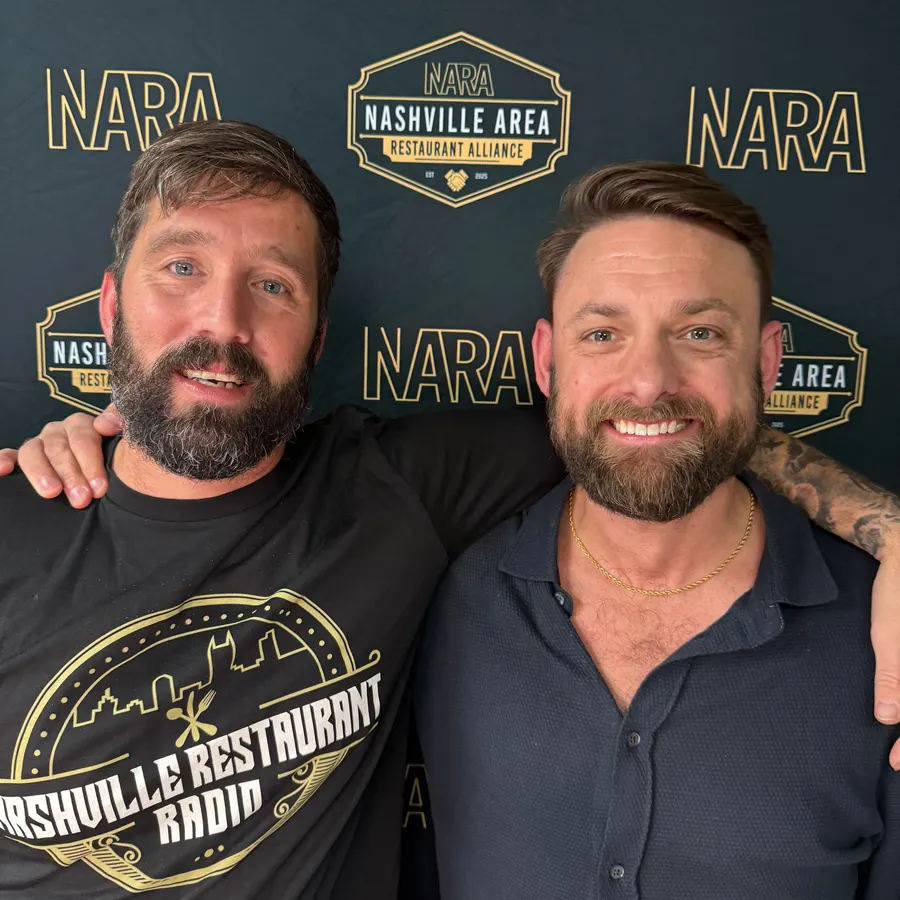
In this bonus episode of Nashville Restaurant Radio, host Brandon Styll steps outside the usual food and hospitality lane for a conversation that came together by chance in a Channel 4 green room. Brandon sits down with Mitch Hutchcraft, a former British Royal Marine Commando and author of Limitless: Nine Pillars to Unlock Extraordinary Human Potential, along with Mitch's friend Daniel Lewis, a Nashville-based commercial litigation and entertainment attorney.
Mitch tells the story behind the longest climb of Mount Everest in history, a 237-day, nearly 9,000-mile triathlon that started with swimming the English Channel, continued with a 7,000-mile bike ride across 18 countries, a 600-mile ultra marathon through India into Nepal, and ended with summiting Everest. Along the way he lost 48 pounds, nearly died multiple times, and used the journey to grieve his late father and raise money for veterans' mental health.
The conversation digs into the mindset tools from his book, how grief can become fuel, why getting uncomfortable builds confidence, and how to compartmentalize pain. Daniel announces his own plan to climb Everest, and Mitch previews his next project, rowing the entire Pacific Ocean from Peru to Australia with a Colombian teammate to launch Colombia's first men's mental health initiative.
“The last thing I ever said to him was, I promise I'm going to make you prouder than you ever dreamed possible. And that loss, that grief, that became the power.”Mitch Hutchcraft, at 10:20
Key moments
How This Unlikely Episode Came TogetherBrandon explains meeting Mitch in a Channel 4 green room and inviting him and his friend Daniel to the studio on the spot.
Meet Mitch Hutchcraft and Daniel LewisIntroductions to Mitch, former Royal Marine and author of Limitless, and Daniel Lewis, a Nashville attorney and climbing partner.
A Normal Kid From Flat EnglandMitch describes his farming family upbringing, ADHD, and the childhood dream of Everest sparked by his grandmother reading him a book at age six.
Losing His Father and Finding PurposeMitch shares losing his dad at 19 and the promise he made to make him prouder than he ever dreamed possible.
Turning Pain Into PurposeMitch and Brandon discuss grief as a superpower and how Mitch's cousin's suicide and Brandon's cousin's plane crash shaped their outlook.
Joining the Royal Marine CommandosMitch recounts hiding his knee surgeries to join the Marines and earning his green beret after six months of brutal self-training.
Training Harder Than You FightThe story of Marines sneaking 100 pounds of rocks into his pack during a nine-mile run and how it became his lifelong benchmark for hardship.
Swimming the English ChannelMitch breaks down the 18-hour, 22-mile swim, a torn shoulder, inhaling seawater, and swimming the final hours one-handed.
Rowing the Atlantic OceanMitch describes his 3,000-mile Atlantic row, the marine life encountered, flying fish, a nine-foot blue marlin tailing the boat, and surviving on military rations.
The Next Expedition: Rowing the PacificMitch announces a five-to-six-month, 9,000-plus mile row from Peru to Australia to fund Colombia's first men's mental health initiative.
Mindset, Comfort Crisis and CompartmentalizationThe group discusses The Comfort Crisis, why getting uncomfortable builds happiness and gratitude, and how to process emotions rather than stuff them down.
7,000 Miles by Bike Across 18 CountriesMitch recounts cycling from France through Turkey, Iraq, Saudi Arabia, Pakistan, and India, including scrapped plans to cross Iran.
Following in Hillary's Footsteps to KathmanduAfter a 600-mile ultra marathon into Nepal, Mitch is hosted at the British Embassy, recreating Edmund Hillary's 1953 departure for Everest.
Summit Day on Mount EverestMitch describes stepping over bodies in the death zone, feeling his father pulling him up the final 400 meters, and what the summit meant.
Daniel's Everest Plans and How to TrainDaniel confirms he will climb Everest, and Mitch explains acclimatization rotations, oxygen use, and why training with a weighted pack matters.
Where to Find Mitch, Daniel and the BookPlugs for Daniel's practice at Tristar Law Firm, Mitch's speaking and book Limitless, and a plan for a Nashville book club and January NARA event.
Brandon's Wrap-UpBrandon reflects on the serendipity of the episode, teases Mitch's January return, and reminds listeners about Thanksgiving options from NARA members.
Full transcript
Running a restaurant is tough. Staff turnover, rising costs, and the endless tasks that bog you down and take you away from what you love. Let Adams-Keegan lighten that load. Their privately held Tennessee-based restaurant and hospitality-focused outsourced HR, payroll, and benefits firm. The team at Adams-Keegan removes the administrative burdens of HR administration, payroll benefits management, garnishments, unemployment claims, compliance, 401k, and so much more. From their proprietary HRIS platform to seamless payroll and competitive benefits that keep your team smiling, they've got you covered. Adams-Keegan lets you focus on what you do best, creating unforgettable dining experiences, while they handle the rest. Essentially, think of Adams-Keegan as your back office HR department, right here in Music City. One of the many things I love about Adams-Keegan is that unlike big publicly traded companies out there, they have an incredibly high standard of customer service. And that's what we all need, is really good customer service in these areas. They don't give you a 1-800 number and make you fill out an IT ticket submission. They surround every client with a team of experts, all based right here in Tennessee. You can call them today at 615-627-0821 or visit Adams-Keegan.com. That's A-D-A-M-S-K-E-E-G-A-N.com for your free HR consultation and see how they can create a customized solution to help your restaurant thrive. Welcome to Nashville Restaurant Radio, the tastiest hour of talk in Music City. Now here's your host, Brandon Styll.
Hello, Music City, and welcome to Nashville Restaurant Radio. My name is Brandon Styll, and I am your host. We are joined in the episode with Vince Lanney. We are also powered by Pepsi, and we are in the Minute Man Press Studio. Super excited to be here. Fun episode today. Today, we are talking with a man named Daniel Lewis and Mitch Hutchcraft. You may not know who he is. You may know who he is. I don't know. He wrote a book. It's called Limitless. This is Mitch wrote a book called Limitless. I met him this morning on an episode on Channel 4. I do a segment every single the first Friday of every single month. It's called Where Are We Eating? Where Are We Highly Local NARA Members. Really excited to do this. Big thank you to Carol Sullivan for inviting us on to share and support local. It's really awesome. In the green room, I met this young man, and we started talking. I was like, you are so fascinating. Can you please come to the pod? Can you come to the studio after we get done on TV? I want to learn more about you. He was like, yeah, man, no problem. He's from London. You're going to hear me do this in just a second. I'm going to tell you, the guy swam the English Channel. He then biked 8,000 miles across the world to start at the ocean and hike all the way to the top of Mount Everest. The longest hike to Mount Everest ever. He did it in 240 days. He tells his story. He's also rode the Atlantic Ocean.
I mean, this is a departure from our normal episode. I'm not going to get into the details. Our normal episode, but he was so interesting, and it was so much fun having him here. He invited his friend Daniel to come with him, who announced he will be climbing Everest on his own, which I thought was pretty cool. We'll definitely have a really fun episode today, and I'm excited you're here for it. This is a kind of a bonus episode because we have so many other episodes that are coming out. Next week, we got two more coming out next week. Stay tuned. Enjoy this one. You are listening to Nashville Restaurant Radio. All right. Super excited today to welcome in everybody. We have a full studio today. Vince, what's going on, man? Not much. Excited for this one. This is going to be an interesting one. Before I introduce our guests, I'm going to tell a story. This episode is going to come out of left field. It has nothing to do with restaurants, but if you're a human being, I think you'll like this one. I was on local today in Nashville today. I'm in the green room, and they tell me these are the people. We had a Kennedy that was on the show today. What was his name? Shriver? I mean, so there was literally John F. Kennedy's sister's son was on the show today, so we got to meet him. I forget his name.
I'm not a Kennedy guy. Alex Ballew was on the show from Chinwag, winner of season 21 Hell's Kitchen. Then there was this guy on there that had climbed Everest, the longest climb of Everest ever. I was like, what am I going to do when I get on there? Be like, I tell people to eat local? What is this? It's not a thing. I walk around, meet everybody in the green room, and then there's this guy. He's just sitting there. Everybody else is dressed up in there, and then he's just sitting there. I'm like, what's up, man? How are you doing? I said, are you the guy that climbed Everest? He's like, yeah. Then I was like, oh, you have an accent. Then I started talking to him, and I was like, holy shit, this is the most interesting person I've ever met. I said, do you want to do a podcast with me after this is over? He's like, yeah, why not? Here we are. I met this man an hour ago. His name is Mitch Hutchcraft, and he has wrote a book called Limitless. Welcome to the podcast, Mitch. Thanks for having me. It's great to be here. I met you five minutes ago.
I'm learning about you literally as we record this. If you're a golfer, this is the equivalent of just grip it and rip it. This is the thing, right? I'm not a golfer, but that is how I play golf. That's exactly how I play golf. Mitch was telling me, he says, I've got a buddy who wants to climb Everest too, and he hangs out with him here in Nashville. His name is Daniel Lewis. And Daniel, he called Daniel, and Daniel was like, yeah, man, let's go. I was like, you're coming on this pod with me, man. Tell me where to go. Yeah, that's it. So now we have- Whether it's a podcast in Bellevue or Mount Everest, you're in, right? Yeah, yeah. So we have Mitch Hutchcraft, Daniel Lewis here in studio. Welcome in, gentlemen. Thanks for having us. Really appreciate it. Appreciate it, man. It's kind of a long intro. Sorry about that. I don't usually do that, but nobody knows. This is really cool. It's a bit off the subject realm. Mitch, you wrote a book called Limitless, Nine Pillars to Unlock Extraordinary Human Potential. Yeah. And that's what you're on the show today kind of talking about. It's coming out here in America pretty soon? Yeah, it was published in the UK back in May, but it's being published across the US next month in December with HarperCollins. So I'm really excited. So I'm coming back here a lot.
And we have a copy of this. You do, yeah. The first one in the US. All right. Wow, first one in the US. And he's going to autograph it for us too. And I'm going to read this this weekend. I'm so excited. So let's let people know, I don't want to begin to tell your story. Tell me what you've... We're in the car on the way here and you're like, well, you know, when I rode across the Atlantic Ocean, when we rode across like row, R-O-W-E-D, rode across the Atlantic Ocean, and then you went directly from the UK all the way to Nepal and you climbed Mount Everest. You swam the English Channel and then you rode a bike all the way to... Yeah. Like, tell me what you've done. No, that's fine. I mean, so thanks for having me. My name is Mitch. So long story short, yeah, as I always say, it's a combination of coffee and ADHD, which has done this to me. But I'm... He knows all about that. I'm just a normal guy from kind of the farmlands of the flattest part of England.
I grew up just with a very normal family and nature and outdoors has always been just... Sport has been my love, my escape, you know, of being out there. So after a turbulent year, a few years, long story short, last year, I was lucky enough, which is the premise of the book, last May, I was lucky enough to complete the longest climb of Mount Everest in history, which was just under 9,000 mile triathlon start. Day one was England, the English Channel, and day 237 was the summit of Everest. I lost 48 pounds, nearly died 100 times. But before that, it's kind of, yeah, there's been many things that brought me at that point, which the book talks about. The book is a manual just for everyday, the everyday person. Like, I'm not a superhuman. This is the kind of message that I want to get out to people that you define your own possible. You've just got to take that first step and believe. When did you do your first, like, massive endurance challenge? Do you run marathons? Like, you're talking about rowing the Atlantic. Like, what would cause me to do something like this? I just kind of luck in where you are and saying yes, and always saying yes and being positive.
I'm genuinely the worst runner, the worst cyclist. I've had two knee surgeries. I wasn't even meant to be able to join the military. I spent six years in the Royal Marine Commandos. But again, I wasn't even meant to be able to join. So long story short, when I was 19, 20, I lost my father, which is a big catalyst to this whole story about how adversity and loss and grief are your biggest superpower, if you allow it to be, if you allow it to be, basically. So after that... Hold on, can I stop you right there? Yeah, of course. Loss and grief can be your biggest superpower? Yeah. So chapter two of the book is adversity equals power. And that whole chapter is me just telling you about my own background, my story, losing my dad as a teenager, looking after my mom. And most people obviously see failure, self-doubt, self-doubt, doubt from other people, injury, grief as, like, a negative, which it is. But negativity and positivity is literally a perceptive. It's a perception. It's a mindset. So I'm just lucky the way I think. My ADHD, I'm an optimist, you know. And well, my dad, yeah, is obviously horrible. But having that, having that anchor that I had, like the last chapter of the book is called Purpose Beyond Self, having a reason more than just for yourself to do whatever you want to do.
The last thing I ever said to him, so basically, he got diagnosed with cancer. I got a call, I was in Australia, and he's like, from working full time, healthy, your dad's got three weeks to live. I was 19 years old, and I got back in just enough time to see him. And the last thing I ever said to him was, I promise, as I walked out of the room, the last words I ever spoke to him was, I promise, I'm going to make you prouder than you ever dreamed possible. And that was, so that loss, that grief, that became the power. Because we all have a choice when we lose someone. Everyone's lost a brother, a mom, or maybe not a brother, sorry, a grandma, a grandparent, you know, hopefully not someone close to them, but a parent or anyone. And we have a choice when it happens. Do we let it break us or build us? You know, I lost a cousin two years ago. He was 35 years old to a plane crash. And worst day of my life. Absolutely horrible. And I could not reconcile it. One of the things I always tell Vince and I both kind of live by this is that everything is for you. No matter what it is in this world, there's a lesson, everything is for you. Good or bad. Eventually, it is, everything is for you. It's the way you look at it. It's just a perception. And I couldn't, I couldn't get there with this moment. And then so a year after the crash, I went back to California and I hiked the mountain that his plane hit. And I saw it was at the crash site. And I spent time with his family. He has a younger brother who's the oldest in the family, younger brother and two younger sisters. And his younger brother ran the LA marathon that year because he, this Blake was his name. He ran all the marathons. He was a marathon runner. And so Trent, his brother had never ran a marathon before. And he's ran the LA marathon every year since. And he's ran the Boston marathon. He's a marathon runner now. And throughout the entire race, he holds a picture of his brother. The whole race, he's holding a picture of him the whole race. And I think it was that night that I stopped and I went, there's so many things that have happened because of this that have elevated so many people. But his brother has motivated, his completely, his life has completely changed. I think for, it's obviously a terrible thing, but like he's dedicated all of these things. It's really
fascinating what the human spirit can do. Yeah. I'm sorry about that. It was similar for me, my cousin. So just before I rode the Atlantic in 2021, my cousin hung himself and I was like, he was like my brother and my mom brought him up. So it was the same for me, as I said, and we all have that choice. Like when we lose someone, no one expects you to deal with it like that overnight. Everyone deals with it in their own way, but you can turn pain into purpose. And that's what your cousin did. And that's what I had a choice to do. You know, you say you have a choice to carry them with you, to move forward and carry them with you and honor them through action. That's what I decided I was going to do. So obviously I had to give anything to give my dad back and he'd give everything to give my cousin back. But what it does to people, yeah, it kind of gives you that purpose beyond self, that fire. I call it like the log in grief. You know, grief and loss is the log and the fire of adversity, which burns the hardest, you know, but it's also, it's the, it's the hottest, it's the, but it burns the longest. The log is the one that takes the longest to burn out. It's the one that's the hottest. It's the one that keeps you warm throughout the night. So that's what loss and grief can give you. If you're allowing your mindset to think that way, of course, you're going to be upset. Like the day after my dad died, I told, I literally went out with my friends and I was speaking for days and they were like, what's wrong? I said, yeah, lost dad like yesterday. And they were like, why don't you tell us? I was like, I don't know. I didn't cry for a year because it's the way I deal with it. But I made the decision straight away that, you know, I, I'm going to carry him with me and I'm going to keep the promise, keep, keep all the promises I haven't made him, but then take it to another level.
How did you decide how you were going to make him proud? Like, cause there's a million different ways in which you, I'm going to become an attorney like Daniel. I'm going to do whatever it is. I'm going to be easier. Everyone's got their loved ones. Everyone got, everyone's got their reasons, their dreams, whether it's come with us, their, their, their profession, their life, their, their physical goals, whether it's your career goals, me and my dad, it was just living. It was me going off the principles that he taught me as a kid. You know, we grew up, he's a, he was a farmer. Um, you know, this guy who works, you know, driving tractors with smoking every day, like best guy in the world, but anything, any dream I had, he'd always said, yeah, he always supported it. He said, you want to do it? So when I was six years old, when I first, when my grandma read me the book on Everest, I came down to have dinner. And I remember when I was like six or seven years old saying, I'm going to climb Everest. And he was like, good man. Even then he supported me from the start. We spoke about joining the military when I was in my teens and all this. So when he died when I was 19, that's the first thing I did. So I just, the way to honor him for me was everything me and him had ever spoken about and every little dream that had been echoed, every little dream that had been mentioned, I was going to take, I was going to do it, but do it to a level that he, he would never have like thought. And that gave me such drive. So the first thing I did was, was join the Royal Marine Commandos just about six months after he died, which was the first step in, in kind of redefining possible for me, because that's chapter one of the book is redefining possible, simple steps, you know, tiny steps to get to where you want to go. So that was my first step in that. And the first promise of keeping to my dad was to join the Marines, which I wasn't even meant to do. Ironically, I had to, I had to have two knee surgeries. But luckily my surgery was done in Sydney, Australia. So there was no record on my British medical records. So I just trained, I trained seven days a week, three hours a day for six months. And somehow, luckily enough, yeah, after nine months, got my green beret.
I never knew they didn't know about your knee. No, I told them, you couldn't, you couldn't hide the scars. So I told them I had surgery, but I just left out the part. I was like, Oh, I'm just a kid. I don't know. I don't know. I don't know what I'm talking about. I knew exactly what they did. And I knew exactly that if I told them, it would be, it's just like asthma, you know, in the military, say it was here, you know, if you tell it to people, you have, you've got a certain condition and they don't let you in, but most of the time, um, it's, it's such a shame because the amount of amazing people that the military pass over because of this tiny condition, which isn't necessarily going to stop them. It's a shame. So I just thought there's any, I might not get in. There's a good chance I won't get in, but what's the main thing my dad taught me? You said, you said you get through this on coffee and ADHD as a child. Yeah. Like were you like a troublemaker? What was your, what was like your child? Like, I mean, what did you, how did you know you have ADHD? What had that look like as a child? How does it look like as an adult? I mean, as a child, like kind of between the ages, probably a three and six, you know, it was just naughty beyond measure tantrums. Like my parents couldn't take me to public places because I'd throw a tantrum or because you're drinking coffee at three years old.
I should've started whiskey earlier. No, um, and it was just, You still can't go to public places, bro. No, I still can't. We have to come in and sit in podcast studios. But now I just don't throw tantrums. I just talk forever until people get bored, which is fine. But no, I was just lucky. So in school and that it was, it was hard to concentrate, you know, anyone who knows ADHD, it's just, it's not an inability to, to focus. It's just inability to focus on something that doesn't spark your interest. Yeah. So anything I didn't like, I just didn't care about, like that was it. But luckily they're perfect. It's a good, it's a good excuse in school when you tell your teachers. Um, so it's just one of them. But luckily, as I say, when I was pretty much around the age, five or six, when my grandma read me that book, I found the outside, like nature of like looking at bugs for hours on end, running around, um, just running. I found movement and nature was medicine. That is a healing to the human spirit, you know? So that kind of calmed me down straight away. So from six onwards, I was fine. Like even in school I was doing fine. You know, I didn't like a subject like in math, in like math, in math, I probably got that. I failed. But then in like all the others, I'd get a stars because I liked them subjects and I was focused. If I like something, I was going to do it like to the very best of my ability. Did you like being in the Royal, Jack being a green beret? Yeah, it was, it was incredible. One of the best times in my entire life. How long did you do that? Just under six years. So it wasn't too long. I joined in 2015 just after my dad died. Um, and it was an interesting time. Like, um, I missed, I was very fortunate that I didn't have to see like my friends being killed. You know, I've had a couple of friends that have been killed in action, but, um, I didn't go to Afghanistan, um, because they all got pulled out. The British military got pulled out just before.
So I was very fortunate, but I've worked and served with some of my closest friends who have been horrendous, you know, um, stories, which is one of the reasons why mental health and veterans mental health is my, it's such a big passion. This whole expedition, the longest time I've ever seen in history was done for a veterans charity that makes mental health courses for veterans using nature. And I'm starting my own foundation, my own charity, literally in a month doing the same thing. I love that. Do you want to throw some stuff in Daniel? You're just hanging out. I feel bad. I'm like, I'm just enthralled and I'm like Daniel here. Yeah. That's one of my best, best buddies. I introduced him. So we climbed, we climbed Mount Ambedablam together, which is a beautiful mountain in the Himalayas, uh, nearly 7,000 meter peak, but technical. And, uh, it was, um, it was impossibly gorgeous, beautiful. It's the most photographed mountain in the Himalayas. So if you're going to trek Mount Everest base camp, which some people have done, all the friends that I've done, it's like, it's the mountain. It's just there. You know, I've done base camp when I was 18. So, um, and that was the first time I saw it and it was beautiful. So when I got a call saying, do you want to come and do this? It was amazing. And then I met this great guy here from Nashville, which is why we're in Nashville. While you guys were, you met, we met at the base camp, we became really good friends. Um, and, uh, yeah, and we've both shared his love and passion for the mountains and it's taken three years to get to Nashville. So how many meters did you say it was just under 7,000 and how many feet is that? Uh, 22,000, 21,000. Yeah. So 20, just over 21,000 feet. Don't quote me, but yeah, it's, it's still a big mountain and it's technical. It's known as like the Matterhorn of the killer of the Himalayas, if that makes sense. So yeah, it's like, it's harder to climb than Everest. Technically we have people in the group who had done Everest in training for this mountain. So it was tough, you know, but it's like in the military, it's like in life, you know, one of the things I go on about in the book is train harder than you fight, train harder. Tell them about the rock. The what? Wasn't it the last rock you had where they, you're, uh, went back and he put all the extra rocks on the rocks. Oh yeah. I was just, I like to tell people, you know, it's whenever you have something really hard happen, physical, psychological, emotional, you've lost someone, something bad happens. That's your, that's like an anchor. Yeah. You've got that to refer back to. That's your power. Cause you know, you can
always go back and say, I got through that so I can get through anything for me physically. That was in the, in the Marines when I was doing my training, we like had no sleep for four days and they, we got woken up saying you've got five minutes to have everything packed and begin the, begin the nine mile run back to camp. But, um, they, in the night they'd snuck at least 90, nearly, nearly a hundred pounds of rocks into our backpacks literally. So it was nearly like triple the weight of what it should have been. But we were so like exhausted and hallucinating that we didn't really notice. So the Marine, you know, PTI turns up the trainer, like we're going to run back to camp and he's running at a pace that like we should be having with 45 pounds in the bag. And we've got like, well, well over a hundred pounds in the bag. So that for me, that was like the benchmark. I call it the benchmark up until that point. Like I only managed to get through that by the skin of my teeth, like the hardest thing I've ever done. So up until the English channel, which was the hardest day of my life up until that point, that was my crucible. So that's what I like to call it a crucible, you know? Um, and that was hard, but I think that's one of the reasons why I'm so I'm managed to get through what I have because so much, you know, wait, as soon as I'm losing my dad and that, that incident in the Marines and the whole commando training and when bad, tough things happen, that just becomes a benchmark for you. That becomes something you make anything that comes next. You say I've got through that. I can get through anything. And that applies to life. Is that where you go to when you're, when you're at my, when you're at mile 17 on the English channel and it's what, 19 miles? How many miles is the English channel? 22 miles? You're at mile 20 and you've been going for 16 hours of, and you can't touch anything. You have to swim all the way. There's no, I'm going to take five minutes now. Like there's no surfboard they throw to you and you can hang on to for a minute. You're literally 22 miles. And how many hours does it take you? It took me 18 hours, 19 minutes and nonstop. So it's 17 hours. Yeah. You're, you're probably, I mean, you're absolutely sent the hardest thing you've ever done by far. What goes through your mind?
What's the thing that like makes you put your arm forward another stroke? Hey guys, want to talk to you today about C and B linen, and we don't have a lot of time. So what I'm going to tell you is typically you cannot trust your linen company. 90% of people we meet with do not like their linen company. C and B linen, you can trust. They're absolutely amazing for all of your linen needs, tablecloths, mats, any of these things. Definitely contact C and B linen. Jonathan Washburn is our sales manager. His number is 731-291-8077. Super excited to tell you about Minuteman Press. They are your sign printing solutions provider. They will meet all of your sign and print design needs, including interior and exterior signage, banners, posters, foam core and foam X trade show displays, portable banners, retractable banners, teardrop flags, window and wall graphics, storefront signage, car wraps, and everything guys. Minuteman Press does an amazing job. They're local. They're right here in Nashville. Give them a call 615-266-4945 and ask for Payton. So excited to tell you about Pliny Crane. Socials are a must. Doing them yourself isn't.
Grow your socials and expand your business. They do content creation, social media management, digital marketing management. You're going to get 9.5 times more leads. They're generated by high quality target content compared to low quality untargeted content. Guys, I'm telling you, everybody has to do socials. It's part of this world. Better have a professional do it for you. And if you want to get it done right, you call Carter Crone. His number is 865-850-7809. Sharing is caring. Sharing great cocktail experiences is now simple and fun. Pick a city, choose a venue, and send a cocktail of wine or beer to friends, colleagues, business prospects, or even yourself. Go to sharedspirits.com and sign up for an account today. And if you're a restaurant owner, contact them about getting started with your restaurant specials at sharedspirits.com. Twine Graphics. Guys, they're local, right in downtown Franklin. They do in-house screen printing and embroidery for brands, events, and organizations. They can take your brand to the next level. You need merch. Everybody needs merch, and they are the ones that do it for you.
They can do screen printing, like I said, embroidery, promo gear, whatever you need. All you have to do is give Brandon Hagan a call. His number is 270-303-3764 or visit them at twinegraphics.com. Name brand insurance brokers offer baseline coverage. Their lack of industry specific knowledge leaves clients vulnerable to coverage gaps. Robbins is different. An independent restaurant agency, they prioritize their clients over their insurance partners, providing individualized coverage to satisfy your unique needs. You get a guy you can trust in Matthew Clements. His number is 863-409-9372. I think I'm lucky because of all the experiences I've come before that, because of the loss of my dad, my training in the Marines, learning to be comfortable being uncomfortable, all the lessons I've learned in the Marines, cheerfulness in the face of adversity, which is another chapter in the book, learning how to just crack a smile and just laugh at yourself in the worst moments allows you just that interruption to keep going a little bit more. Chapter six is strategic pain management, and that's about how pain is temporary.
No matter what you're going through, physical, emotional, as long as you remember, the pain ends. Pain is temporary. This too shall pass, right? This too shall pass. He's training for a marathon right now, so I'm trying to help him out a little bit right here. Yeah, so one of the main things to answer your question, you've got to be through it, is knowing that it ends. What I'd learned from the Marines, from the loss of my dad, grief, pain, physical, emotional, no matter how bad it is, just remember there's always a light at the end of the tunnel. No matter how it might take you a day, a month, a year of grieving of, oh, you're running a marathon, you're at mile 10, it's disgusting, but guess what? As long as you know this is going to end, tell yourself this is going to end. I'm going to be at home, I'm going to be having a massive steak soon, I'm going to be in one of your amazing restaurants that people are going to be listening to, I'm going to be home, and soon it's going to be over. The only time you'd have to worry is if it was never going to be over, but as long as you just have that realization. So in the English Channel, like 15 hours in, literally I couldn't hardly move anymore. I tore my muscles in my shoulder, my tongue was dissolving, I'd inhaled so much water, I was sick and drowning nearly. The only thing that kept me going was just one more stroke, one more stroke, knowing that there would be a cup of tea waiting for me, a cup of coffee on the other side. That's when you were going one-armed, right? I was essentially swimming one-armed for the last five, four hours. I was swimming one-handed, it was disgusting, yeah, it was horrible. But that's to answer your question. It's like if I had two arms, I would have done that in 15 hours. Yeah, but I'm so thankful, so thankful that it took about five hours longer than what we planned, what we expected, because the weather was so bad that the boat wouldn't have even left England if it had been that bad. Why didn't you postpone it a couple of days? You couldn't really, because it was the end of the season in September 2024, and it was day one of obviously my 200, 300-day journey, and I just couldn't delay it anymore.
But it's not that, it was okay to just begin, but it's just the weather changed, and I just had to fight through it. But when I got to that beach in France, I started at like two o'clock in the morning, and I finished at 11pm that night. Were you not afraid for sharks? No, so luckily England's cold as hell, so we don't have like dangerous sharks. It's not like swimming here, but we're in Hawaii and things like that. I've got friends who've been attacked swimming across Hawaiian islands, but we've got jellyfish and seals and stuff, so I swam into jellyfish, but nothing crazy. But when we got to France, yeah, luckily I didn't get stung, but I swam into them like loads, but I got stung in training loads, but no, and that was just so tough. I was so thankful that was as hard as it was, because it made every day after that, when anything hard happens to us, it made every day after that much easier. Even Everest was paled in comparison. I have a, from a marathon training perspective, I have a question. How do you fuel when you're swimming like that? I'm running, I have the channels and all that. It's very interesting, it's pretty much a similar process. So in the channel, Channel Swimmers, every 30 minutes on the dock, your coach, the person on the boat, there's a big boat next to you, like you can never touch it, it's like five metres away, you can never touch it, it's just there in case you obviously like drown, or they have to pull you out, or whatever. So every 30 minutes on the dock, they throw you a bottle, like basically on a bit of string, a bit of rope, and you have to just literally quickly like tread on water, like no touching anything, just quickly neck it, quickly drink it as quickly as you can, eat half a banana, have that little bit of chocolate, whatever you can, every 30 minutes on the dock, and they change it up each time. One time it's electrolytes, one time it might be more nutrient, like food kind of stuff. So every 30 minutes, that's kind of the plan that the coach has, so like I think there's something like, you know, every 30 minutes, so I had like 30, I had like 36 feeds, 36, as I show you. Do you start thinking like, I only have 10 more minutes, and then I get to tread and drink? Again, that's another motivational thing. Yeah, chapter eight, the power of compartmentalization, breaking overwhelming goals into tiny manageable chunks.
There's something like if it's a marathon, and you're thinking of nothing but getting to that next mile, that's it. Don't think about anything past that. That's what I was doing, I was living for nothing but the next feed. So every time like I had the feed right, get through 30 minutes, that was my horizon, literally was that. Because if I thought of the end, if I thought of France, if you start your marathon, and you think of the end, the last mile, your head will explode. You know, that's what I did in the Atlantic, we talked about earlier, when we rode across the Atlantic, we lost sight of land within three hours. No, we wouldn't see land again, or another human being for nearly two months, seven and a half weeks, rowing across the entire Atlantic Ocean with no one, the closest human. That's what seems so drastic for me, too. When you're running, you can think like, all right, I'm going to go, and before my next interval, I'm going to go to that tree up there, that stop sign, but there's nothing in sight for you. Yeah, yeah, yeah. You've almost got to create it in your mind, you know. So I told you about cycling across the United States, in training for this, sometimes you've been in the middle of Texas, and there'll be nothing. I just have to kind of create like something in my head, you know, a tree in my head, or like a fake kind of milestone, you know, or just listen to a good podcast or a radio show.
I got a lot of hours of this going on. Hey, I want to jump into you rowing across the Atlantic. You just said, within three hours, you cannot see the land anymore. Are you solo, or you have someone with you? Oh, for the Atlantic, there was four of us. There's four of you. Yeah, so you're rowing for like two people on, two people off. So you're basically rowing two hours on, two hours off. And how far do you go? Where do you leave from? So we left from Spain, the Canary Islands in Spain, and we rode all the way to the Caribbean. Yeah. You rode... I'm saying the Caribbean, we call it the Caribbean, but yeah. All the way to the Caribbean. Yeah, to Barbados, in fact. Yeah, 3,000 miles. 3,000 miles. So you get three hours in, you can't see. Have you ever been on a boat by yourself that far out before? It's your first time ever? Before this, I've rowed twice in my life, before this day. Yeah, I'd rowed, honestly, twice. But it was just one of these things that I said yes to. And I should have done some more training, probably. But it was incredible, best experience of my life. What kind of marine life do you see out there?
Oh my God, it was incredible. So we had, it was literally, if you've seen the life of Pi, it was like that. So we were 1,000 miles from land at one point. The ocean was like glass. We had pods of dolphins swimming underneath us, leaving trails of sparkling blue and green lights beneath them, underneath stars so bright that the shooting stars turn night to day. Like, it was the most magical thing I could ever imagine, I tell you about. We were far. I had a, at one point, we had a tuna jump on deck. We were about, yeah, 1,500 K in, halfway across, or probably a bit closer to the Caribbean. And that's when you start to get the flying fish. So you're rowing along. Next thing you know, bang, black eyes, because you've got flying fish hitting you square in the face. Because the boat is five meters long, it's tiny. Like, I can reach over with my hand and touch the water. That's how close you are to the water. So you've got these schools of flying fish flying across you, and the deck is littered with fish. And this tuna jumped on deck and slid off. We were like, whoa. And then next thing you know, my friend shouted, shark, shark! Stood up, looked behind. And I studied zoology before I joined my sport. I'm a massive animal lover and conservationist. So I looked back, and I knew exactly what it was straight away. It wasn't a shark. It was like a nine-foot, like 900-pound blue marlin. And it was following us for three or four hours, literally right behind the boat, following us. I've got a video of it I'll show you after. So yeah, whales, whales, whales, pilot whales, sperm whales. Why do you think it was following you?
For like, just to be in your wake for an easier swim? Basically, the bottom of the boat, little barnacles start to form in that. And then that attracts tiny little fish. And then that attracts slightly bigger fish. So the tuna was obviously, a lot of the tuna we'll have was maybe hunting the tiny fish or the flying fish that were around the boat. But this little tuna was running from the blue marlin, basically. It was only a small, it wasn't like a bluefin, but it was small. So it was obviously, yeah, like the food chain was quite interesting. Didn't see a single shark though, which was interesting. I was just a bit gutted. I'm hoping the next one we'll see a shark. What is the next one? So long- Yeah, like where do you go from here? It's been a long journey. But no, yeah, since the biggest, hardest thing I ever did was writing that book. It was hard, never rest. But basically, the month that was published in May, my friend who helped me row across the Atlantic Ocean, he was our mentor. He's a half English, half Colombian guy. He rang me and said, do you want to do the Pacific Ocean? Three times the length, so nine to 10,000 miles across the entire world. He said, am I going to do it on my own or I'm doing it with you? And I was like, oh God. So here we go. So now, yeah, we've got a, yeah- You're going to row the entire Pacific Ocean?
Yeah. So me and him, we're rowing from Peru, from South America to Australia to hopefully become the first male pair in history to row the Pacific, full Guinness World Records if we can do it, to set up the first men's mental health initiative in the history of Colombia, which is going to be fun. And there's only been, what, five people- Five people that have ever done it- To row that route? The Pacific, nonstop and unsupported. How many people have failed doing it? Are you going to die? It's not many people normally do it. There's been quite a few people do. So rowing to Hawaii is kind of a thing now, but the entire Pacific, nonstop and unsupported is quite rare. So you're not going to have that boat five meters away from you in case something happens? No, no, no. When we leave Peru, we've got half a ton, like 500 kilos worth of military, well, not military, ration packs and food. And as soon as we leave Peru, it's like totally not another boat, not another human being, nonstop, unsupported for five months across the entire Pacific Ocean. So it's going to be a long time. So rowing, again, rowing 12 hours each every day, nonstop for 450 to 180 days. So it's going to be a really long time. How do you eat the food? Kimpact or a jet boil?
Yeah, pretty much a jet boil. And you can eat them cold anyway. And this time, because when we were in the Atlantic, we had military MREs, we had ration packs that I got from the base and the Marines. And it was horrible because anyone that doesn't know military ration packs, they're designed to constipate you. I don't want to go into too much detail here, guys, but they're designed to bung you up so you don't leave a ground sign for the enemy. So you're not leaving signs that you're there when you're doing a covert operation in the Marines. So after two weeks, though, that caught up with me to the point where it was hard to go to the toilet, let's put it that way. So luckily, this time, the nutrition plan is really good. We're working with the biggest hospital in Columbia. And the nutrition plan, like the food we've got, is like not military. It's like properly expedition foods now. Nowadays, some companies make incredible stuff, a thousand calories per meal, you know, balanced diet. So it's really good. And this time, on my 240-day Everest expedition, I lost about 48 pounds. On this one, hopefully I won't lose anything. The five guys, well, there's two girls and three guys that have ever done it, and they're all really close friends of mine, the Pacific, and all of them, not one of them, lost weight, which was incredible. I lost about 20 pounds on the Atlantic, but that's, again, because we just weren't, it's hard to eat like the six to 8,000 calories a day for five months that you need to consume. It's hard. It's really hard to eat that much.
What do you do in your downtime on the boat? Like if he's rowing for those four hours? Podcasts, books, I'm going to try and learn Spanish because he's Colombian. And I thought, what better way to learn Spanish than being on my own with one guy across the entire Pacific Ocean for five to six months? By the end of the trip, you can talk to him. Exactly. I'm going to tell him, do not speak English to me, and then you're going to force me to learn Spanish. It's been on my bucket list for years is to learn Spanish because it's from South America. You know, it's Colombia. I'm flying to Colombia from the US, actually, in 10 days' time to announce the expedition. It's not been announced in the UK yet, actually, so I shouldn't even be talking about this, but here we go. I don't care. We're in America. We have seven listeners in the UK. Seven, wow. Those seven people. Now, we have 32 different countries that listen to this podcast. I don't know who these people are. We're big in Singapore. I don't know why we're big in Singapore, but it's a thing. A lot of people listen to us in Singapore. I'm happy to be here. I love the US. My training cycle was in this country, and I've got so many good friends here, so it's so nice to be back. And I really want to try and get the message out in the US about the book and the message. Okay, so the book is called Limitless, Nine Pillars to Unlock Extraordinary Human Potential. It's by Mitch Hutchcraft. We're going to put a picture up there, and I tell you what, I want to get back to when you landed on France. No worries.
We've been talking for 30 minutes, and I want to get Daniel in here, too. Yes, for sure. Daniel, you guys are going to do Everest? Are you guys together going to do Everest? We were talking yesterday, and I mean, Everest has always been Dan's dream, same as me, but as I was saying before, it's not cheap, and it's not easy. So it's obviously... But other than that... Other than that, like I said to you... It's simple. It's not simple, but like, yeah, it's... Well, if you can afford it, the next part is just, can I get through it? Everest is mindset and money. That's Everest. That's what I found on Amidablam. You have these inflection points where you get to a point, and you're like, I can't go any farther. And I would pick a rock, and I don't know, I'd go... So you've used these lessons you've seen? Yeah, a few hundred feet, and then I'd go after that, like I'm done, like I'm gassed, and get there, and I'm like, you know what? I think I can go a little farther. And then you get down, and you realize, I guess, you get down, and you realize, oh, I'm capable of way more than I thought, which is really great. Learning that together was good. It's like lifting a veil. Yeah. Learning that together was good. Is that the motivation behind doing something like this? I mean, why do it? I mean, is it just so that you can tell people that you did it, or is it because you're trying to unlock something inside of you that gives you greater potential in the future? Are you trying to find that anchor for the next thing in life? That's kind of my purpose, but Dan might have a different one. For me, that's the reason I do it, and a lot of people do it, is you do one thing, you just unlock another 1% within yourself, and you realize that what everyone's telling you is possible, what society tells you you can and can't do, even friends and family telling you, that's silly, you shouldn't be doing that. Most of the time, it's out of... A lot of the time, it's out of love, because they're scared for you, and they care for you, but as I said earlier, 99% of the time, you realize that you are capable of so much more.
And like Dan said, I'm going to ask him in a minute, but when you do something hard, like a mountain or... Again, it doesn't matter what it is. Your Everest might be 5K, your first ever 5-kilometer walk, and that's as beautiful and as amazing as somebody else's Everest. You're the hero of your own story, but just getting out there and getting to that tiny milestone within yourself, even just saying yes to that one thing that you've wanted to do your whole life, starting that hobby or whatever. But for you, Dan, what did you find most... Rewarding about it. Man, it's been, I like what you're saying though, about find, you know, find your own Everest, so to speak. Most rewarding? I don't know. I mean, I remember being seven and, and, and being in the floor in my bedroom and I was always in Boy Scouts and I read this one article and it just, it's always been a dream. And then I get to the Himalayas and of course we're on Amidala. I've never seen beauty like that. And I, I, I came home and you mentioned unlocking potential. I came home and, and everything just seemed easier. Like I, I, I, I felt like I was better at work and I enjoyed it more in my relationships with my family improved just all from, from being in this incredible place. It's perspective. Now you have, Michael Easter wrote a book called The Comfort Crisis. Have you guys read this? I was just about to get onto that. Yeah. Okay. That comfort. But we all live in this, we, we're, we're all adults.
We know what we like. We don't like, we know going into something like that might suck running a marathon. Like I know that's going to suck. And I know that I don't want to do that because I don't that that's not going to be fun. We live in a 72 degree world. Exactly. But when you, when you step outside of that, you really test your limits and the things that you didn't know before, like I used to, when I read this book, I remember I drove to work when it was a hundred degree day and I turned the air off. Yeah. And I worked in this restaurant, I was in this old house and it was always hot in there. And everyone complained, it's too hot in here. And like they see it's seven different HVAC things. It was just difficult to keep it cool. One day I drove to work and I just turned the air off and I got to work and it was hot as fuck in my car. And I was dying. I was dying. But when I got out of the car and I walked into the restaurant, I was like, it feels like an ice box in here. And all of a sudden I got out of that comfort zone. And then I was able to appreciate a 75 degree house versus going, why is it not 69? This isn't normal. It's that sort of a thing, right? Yeah. That's one of the things I haven't thought about in my book so much. And I think one of the reasons why I love it so much is getting uncomfortable. The only way we grow as human beings is getting uncomfortable, you know, pushing ourselves out of that comfort zone because, and also one of the biggest things for me, what that unlocks is happiness. For me, happiness has been able to see the magic in the small things. He's been able to appreciate and see the magic and the little things that we take for granted every single day, gratitude. So by making yourself uncomfortable. Yeah. I promise you right now, you're going to feel crap for a minute, but then for weeks, you're going to feel amazing. But when I was on the channel, like I say, one things that got me through is knowing that when I get to the other side, that shower, that cup of coffee, you know, the first, that meal I have is going to be the best thing I've ever tasted or I've had in my entire life. And even here, anyone here, like even if you want to just, you've never camped before, you hate it. Fine. But like, if you've always wanted to go and try it, for example, going, going camp, right. Because you're so used to being in your comfortable, warm bubble when the air con on, when you go out for a couple of days, or even just one day, when you get back to your
bed, you've got a new found love for it. You've got a new found respect for it. And you found love and respect for humanity and, and people and love. And that's what I've, that's why I fell in love with expeditions. That's why I fell in love with it all. Well, I think it's, um, it's, it's a great way to build confidence too, when you get into that discomfort zone, because then you're like, what, what is confidence? It's, it's feeling like we can do something not because we've done it before, but because well, whatever obstacle it is, I'll figure it out kind of thing. That's like, it's unlocking a new, it's unlocking. I call it in the book, we call it the limitless loop. That's what I call it. It's essentially anything you do, any experience you do, you know, you lose someone, you do something new at work, whether you're on, all you're doing is unlocking data. It's just data. You're discovering more. You're unlocking your personal, unlocking personal data. So like action builds belief and belief fuels action. And it's an endless loop. So action builds belief and belief then fuels action. And it's a loop that goes around. The more you do, the more you believe, the more you do, and the more data you positive data you get. It's as simple as that. Everything is for you. Everything's for you. If you, if you think that way, as I'm saying, it is genuinely a mindset. It's a perception. If you think that way, you will do that. You know, chapter seven is the relentless pursuit of positivity.
And that entire chapter is just about how positivity is that perception and having that perception almost, you can manifest anything that you dream, anything that you want. If you just are wholly positive and you wholly agree. I felt like that since we got out, well, what, three years ago, right? I came home with confidence. I didn't know I had inabilities. I didn't know I had. And I think, let's see, we were in different groups. So I guess, Mitch, you wouldn't have been there when I got so sick. I think what my pulse, I was at 45% and we passed it around the 10. It ran accurate. Yeah. He had the blood saturation level that he should have been dead. Probably. It was, I shouldn't have been conscious. And when they said, Hey man, nobody's coming, nobody's coming with oxygen. They're not going to send a helicopter up here. Like he, he just, you got to get down, figure it out. And my harness broke. Wow. Which I forget about it. I got it out the other day. I didn't know that. Yeah. The leg, all the leg straps were done and I just had to get down. I mean, Dawa, my Sharpa, but like you said, perception, you come home and you think, I think I can do anything. And then, you know, if you do one thing, I think that's right. I think I can, I died.
Whatever that is, right. Whatever that is, is completely different to everyone. That's the whole point. Everyone's there's no like set strategy. There's no set this, but this book, I made this book because I'm not a professional psychologist. I'm not a, I'm not anything. I'm not a professional athlete, but this is, this is these every pillar. I wanted to make a, I make, I make a bird. I wanted to write a book for the everyday person, person. That's like scrolling through most social media, feeling down, somebody who's been in a bad relationship, don't know how to get back on their feet. Someone who's lost someone. This isn't like, this is a blueprint of just, this is a human condition. Like I know that every pillar in the book, you know, how to get through losing someone you love, how to get through the same exact same principles of how to get through a marathon, you know, focusing on tiny goals on one step at a time and trying to turn that perspective of negativity into positivity. It's all possible and it's all available to anyone. It doesn't matter if it's, that's why I do every talks from, from primary schools up to corporate, corporate level, because it doesn't matter if you're building a business at 50, whether you're a 10 year old going to school, these lessons, these pillars, it's human. It's a human construct.
It's just, I know that this works. This can work for any human. What do you, um, you, we talked about compartmentalization earlier in the sense of, we were talking about it in the sense of like the next mile or the next whatever, but what about a compartmentalization in whatever you're feeling or like a loss or, you know, something stressful going on, then you have to clock into the restaurant or you have to run out of the mile. How do you, how do you tell me about that? Emotionally compartmentalizing. Yeah. I know you mean, how do you, it's kind of the only way to, again, it's kind of figure out for yourself, but for me, kind of the one unanimous rule is that knowledge that it will pass for me, you know, that knowledge that you know, the last thing you want to do is going into work. But if you can tell yourself that by going into work and doing one positive action today, I'm going to be able, I'm going to feel better tomorrow. That's a really good way to get through it. You know what I mean? It's been like the way to get through that, for example, is obviously one of the main messages, especially for men's mental health that I crack on about is speak to someone for God's sake, just talk to someone. Raise your hand.
Your mate, a stranger, a friend, it doesn't matter who it is. Like some people like to speak to people close to them. Some people like to speak to someone they don't know. But when you're trying to get compartmentalized and get through stuff like that, like you're talking about with loss, just try and do one positive thing today that you didn't do yesterday. Speak to someone, go for a walk, you know, just. It's great advice. And in our industry, hospitality, we have a lot of opportunity to do something great for someone. Yeah, yeah, yeah. I bet. Yeah. Acts of service and stuff like, you know, it's just amazing. Asking someone if they're okay or cook someone a meal and get them around, bring them around and talk, talk and laugh. I think the one thing that as men specifically, one thing that we're taught and always taught was to stuff it down. Don't cry. Don't feel that thing. Suck it up. Be a man. And I think that when you have those emotions and I have a coach who talks to me, she says, feel every emotion all the way through. Yeah. When you're angry, feel your anger. I'll be in my car and she'll grab your steering wheel and scream. You have to let it out. Do you need to cry? Like cry? Yeah. Because this is emotions are your body's way of telling you something isn't right. Exactly. Right. So when you feel that, when you stuff it down and you don't feel it, it's still there. It's going to come. You said you didn't cry for a year after your death, but that cry after a year felt pretty damn good, didn't it? It's natural ventilation.
And you need to feel your emotions when you have those emotions, feel them all the way through. And then I remember her telling me, she goes, are you, you feel anger. Great. Let that anger out. She goes, no, let's stop. And let's thank the anger for being there because the anger is trying to tell you something. The anger is telling you something is right. Now let's break down. What's the cause of the anger? And that's a result. Everything in life is a result. And that's when she jumped out and she goes, what part do you play in the result you don't want? And I went, what? She says, what part do you play? Everything is a result. It's either good or a bad result. Nothing is good or bad, but there's a result you want. And there's results you don't want. What part do you play in the result you don't want? That may have caused that anger to let you know that was a result you didn't want. And I was like, oh my God. I mean, it was like, yeah. Whoa. And then that's when you realize everything is for me. Even though this is a result I didn't want, I can now look at that as a result I didn't want. And what can I do differently next time? What can I learn from the behavior that I did that caused that result that I can now change the result next time to where it can be positive. And you can not look at that as, oh, I fucked up and this is bad and I'm bad. There's no shame. No, everything's, I'm just, I'm now growing. I've now grown and I'm going to do something differently next time that's going to be better. Exactly. That can prove it in myself. Yeah. And this whole concept of us having to keep it all in as men is bullshit. It's tough. It's tough as a man. But it's tough, especially in like, yeah. Talk about your emotions. You feel, because like you said, you're taught to feel weak. But like you said, identifying it and being, and accepting it is the first key stage because then you learn from it. And like, that's one of the main things like in chapter two, you know, failure is literally your greatest weapon. Yeah. Failure is the launch pad for success because how the hell, you know, you know, Sly said it best. Why do we fall? So we can learn to pick ourselves back up. Like, as long as you haven't, if you go into failure and adversity with that mindset, if you go into it just already with a smile on your face and accepting it, it goes from a negative experience into something that was needed for you to move
forward, like to progress, like how are you meant to build a really successful, you're never going to build a massively successful restaurant or climb Everest or do this unless you fail a few mountains and understand the value of failure and what it teaches you. I hate the fact that we only have like an hour. We're going to come back. We could do, I haven't even scratched the surface. We just got to the freaking shores of France. You then drove, you got on it, you have torn muscles in your shoulder from swimming the English Channel. And I want to, because we got like 15 minutes left and I want to get into this because I want to, we haven't even talked about somebody fucking Everest. And we haven't even like talked about the fact that you got to Everest and what it felt like when you got to stop. We'll move quickly. You got on, you then got on a bike and you rode how many miles to Nepal? Uh, 7,000 to India. Yeah. So after that, India. Yeah. So after the channel, it was bad. I thought I'd get, I thought I'd be able to get on the bike after a couple of days. I'll be fine. I was broken. I couldn't move. If I wanted to go to the toilet, I had to be carried. I couldn't sit up in bed by myself. I had to piss pee in a pint glass, um, that we kept to keep in the bed. How long were you that way? I was in bed bound for like three days. Um, and I, the hell was so much water that I was like secondary drowning. My, my girlfriend, my girlfriend, Nikki was amazing. She's a medical student. Like she had to literally like listen to make sure I wasn't doing that. And if I wanted to sit up, she had to put all her weight, you know, I was literally like laying there like this arms down my side, like, like in the tube, I could not move. That's the level I'd never pushed myself to that level. Um, it took me three days before I could get out of bed really. And it wasn't until six days somehow. And I also gave me the worst tonsillitis in my life because the water is crap in the English channel. I couldn't eat for three days. I lost two kilos in like three days, like four or five pounds in like three days just from that. Um, but yeah, after six days somehow, cause it was a race against the clock. People like I was like an Instagram and social media. If you want to follow it, I say day a hundred of my race from England to the top of Mount Everest. Cause I had to get to Nepal for that three, four week climbing window. So I literally had, I had a set amount of miles. I had
to do a day to get there in time. So after six days, I managed to somehow get my bum on the bike and kind of cycle one handed and begin the 7,000 mile journey across 18 countries. Let's go. You went through United Kingdom to France, uh, Belgium, Netherlands through all the way across Germany, through Austria, Slovakia, Hungary, Serbia, Bulgaria, Turkey was long. Oh my God. I called three times a heart of Mount Everest just in Turkey alone. That's how hilly that country is. It was horrible. So three Everest's just in Turkey. And then the whole, so this is where I got interested because I was originally meant to be going through Iran from Turkey, but being an ex commander, as you can imagine, it wasn't a great idea for me to go in. I probably would have got in, but I wouldn't have got out, which is a shame because Iran is one of the most beautiful countries on planet earth. The people are incredible. The food's amazing. It's just ruined by a few people. You know what I mean? So I couldn't risk going in basically. So we had a choice at that point to go south or north. So we could have gone across Russia and Tajikistan across Afghanistan and down or go south. And in the end, uh, we didn't get the visa anyway for Iran because of my military background. So we had to make a decision. We didn't go to the south.
So then cycle through the whole of the whole of Iraq from the North through Baghdad, Iraq, Kuwait, Saudi Arabia, UAE and Oman. But what this problem was now is that we had to cross the 400 kilometer to 300 mile stretch of water to get to Pakistan. I didn't want to have to obviously have to get on a bike or a plane or sorry, but you know, but we tried our hardest. It's great. We can talk about it. Well, I was, I was in Oman in Muscat having meetings with the Indian ambassador, the Pakistani ambassador, the minister of tourism, trying to find somehow to get, I was going to get on the boat and cycle like while I was on the boat. Um, but long story short, this is it. You cannot get to Pakistan from the Middle East from Oman with by boat. So we had to take a tight 400 K flight to Karachi in Pakistan. And then we cycled back towards the Iranian border to continue as if that's where we, you know, to keep it as pure as possible. I ended up doing over, over 600, nearly a thousand miles further than what I originally anticipated because of all these kinds of changes. So then, yeah, then we got to Pakistan and then you went all the way through you all the way North through North of Pakistan, a thousand miles through Pakistan, India, all the way South in India. So it was about two to 3000 miles in total in India, across the whole of India. And then, so after 134 days, the cycle finished 7,000 mile cycle finished. I literally cycled into the ocean, into the Indian ocean, which was silly because I had my passport, my, my job, my, my, in my bag and my, but I saw excited. I drove, I'd rode into the ocean, an Indian ocean with my passport, my, my battery pack, my headphones, everything.
Because your goal was from sea level. My dream as a kid was to go from zero to the top of this world on foot. So, so from there, it was literally 48 hours from the bike trainers on to begin the 600 mile ultra marathon from India to Nepal, to Kathmandu. And then from there, it was a 200 mile hike to Everest and then climbing it. But in, when we finished the, the run in Kathmandu, one of the most amazing things happened. I was met by the British ambassador, as well as all the press. So back in 1953, when Edmund Hillary first climbed Everest, Tenzing, Tenzing and Everest and Everest, Tenzing and Hillary first climbed Everest, they were invited to stay at a British embassy in Nepal because there's no hotels. So he said, you've got to come and do it. You've got to come and replicate it. So here I was just finished it. I'm being invited by the British ambassador to stay at the British embassy. So my girlfriend flew over. We're in the VIP suite of the British, British embassy, having a whiskey with the British ambassador. It felt so British. All I needed to do was get a cigar and we'd have been Churchill. So we were sat there and then literally the last thing that Hillary and the last thing that ever happened was the British ambassador back in 1953 gave Hillary a British flag and the Nepalese and British flag before they began their hike. There was no planes or cars back then to begin their hike. So we did the same. So we woke up in the morning, even having breakfast, the same breakfast that they had, like a record of what they had for breakfast. So we literally, we managed to replicate following the footsteps of the first climb of Everest in history with the longest climb of Everest in history was the most mind-boggling thing. Is that a Guinness world record?
Well, it's funny. Do you have any Guinness world records today? Not officially, but it's funny because I had an email from Guinness. So I'd officially applied for the longest climb of Mount Everest in history basically. Didn't hear anything back. A week after I finished the expedition and I was on, you know, we were on the Times, CNN, Red Bull, everything you can imagine. We had an email like literally three days after we finished from Guinness saying your application has been accepted to officially register the longest climb of Mount Everest in history. But I didn't, I don't care about, I don't care about having official record. For me, it's not about that. You know, if anyone wants to see it, Google it. You can see I've done it. Like it's one of them. I know, I know at the top of it, well, you have to pay thousands of dollars to get read, to get registered for this, you know, and it's great. Don't get me wrong. But like the amount of proof as well, you need to provide, you know, and like, I've got like 90% of the Strava data of the whole 9,000 miles, but it would just take so long. And so you might as well just go up the mountain again. Yeah, exactly. Yeah. Yeah. There will be some. Yeah. Cause the Pacific is if we just, just to finish is two Guinness world records just to finish.
When you got to the top of that of Everest. Yeah. That was, um, did you, were you able to look inside? Did you, were you able to speak with your dad? Were you able to, did you feel like I've made him proud? Like will you ever feel like he's proud enough? Yeah. Yeah. I literally felt him with me, but the entire way, the amount of times he got me through hard times, um, and having him on my shoulder, you know, having that person, when you're going through something hard for you guys listening, you know, have that person on your shoulder cause they pull you through anything. Like I felt when I was cycling across, you know, I picture him, I could see him hanging out the side of a car shouting at me. Come on boy. Come on. You know, when we were on Everest, the last 400 meters to the summit, I literally felt like he was like a rope pulling me up. You know, I think our favorite film was Braveheart. Um, our favorite quote from Braveheart is tattooed on my arm. Here is every man dies, but not every man really lives. And that I would just say over and over to myself on Everest and last hundred meters, you know, it's tough. You're stepping up. I stepped over two bodies near the top. And, and, but I just literally like, it's like, I felt a rope around my, around me and him pulling me up.
And, um, yeah, it was the whole thing, you know, obviously was the whole journey was essentially grieving process for me, you know, which is just long journey of meditation and grieving. I've never felt more close to him, never felt more close to him or anyone. As I said, the flag that I had had a picture of him on the summit as well with all my family. And it literally said, this is the closest to heaven on this earth that I could get to tell you that I miss you. And it was the best, the most amazing thing feeling in the world. Yeah. Wow. Yeah. All the dreams rolled into one. And so now Daniel, you're going to do this. You're going to, are you here today to announce in front of God, King and country and the whole world and everybody in Nashville that you are going to do this today? That's the plan. Sharpies bakery is a locally owned and family operated wholesale bakery, providing bread to Nashville's best eateries. They have operated in Nashville since 1986. Yes. Next year will be 40 years. They providing high quality fresh bread daily for restaurants, catering companies, hospitals, and universities. The bread is also free from any preservatives and artificial flavors. The right off of white bridge road, Aaron Moser and her team and doing this for a long time. And you know what I love about them is that they're local and they care. They care about your business. That's like the number one thing you're going to hear me talk about is do they care about your business? And I a hundred percent believe that they do. If you would like to be working with the bakery that cares about your business, give them a call 6 1 5 3 5 6 0 8 7 2 that's 6 1 5 3 5 6 0 8 7 2. Now you can always visit them at sharpies.com that's C H A R P I E R S dot com. And they have pictures of all of the bread that they can have for you and contact information. Go check them out. Sharpies bakery.
Super source develops and distributes high quality cleaning products and supplies, as well as delivers where wash housekeeping, laundry programs, and food service training. They partner with restaurants, golf and country clubs, hotels and resorts, schools, universities, and healthcare institutions. Save time and money and reduce inventory by utilizing their high quality products and engaging with their highly trained service specialists. If you're looking for wholesale cleaning products like dish machines in Nashville, Tennessee, they have you covered. Listen guys, this is way more than a dish machine and chemical company. They do not make you sign a contract. They earn your business every single week. And let me tell you, I will personally vouch for Jason Ellis and his entire team over at super source. If you want a dish machine and chemical company like this, give them a call 7 7 0 3 3 7 11 43. And if you are a member of the Nashville area restaurant alliance, make sure you tell them that you get these special NARA pricing. Y'all I'm super excited today to tell you about gold drop vodka.
This is a local Nashville based spirit company. Now the product, the actual juice, as they say, comes out of France. We just had JB who's the owner on the podcast and he swears this is impossible to get hung over drinking this, this vodka. It is that smooth multiple times distilled. It's a unique process that they go through. You can get it through Ajax Turner. If you do purchase this through Ajax Turner, send me a message, send me a message and say, Hey, Brandon, we just brought on gold drop vodka. We're going to feature it. And I have got a special gift for you for doing so. Just a little something to say, thank you. And I want to tell you, if you are not in the opportunity to do alcohol things, we want to talk about North Canada. They have a berry lemonade, a prickly pear lime, a strawberry melon, a blood orange mango, amazing, amazing alcohol-free THC beverages. You can pick them up through Lipman Brothers. The flavors are delicious. There's zero added sugar and there's zero calories. They have five and 10 milligram products. Guys, I want to tell you also about Eradicare. Eradicare is a pest management system. So one thing, if you have a pest care company that just comes in and sprays, I kind of look at that like this is the medical world. Like the money is in fixing the symptoms, not actually curing the disease. And that's what a lot of people do. What Eradicare does is they use baits. They go in, they set the traps, they go in and kill anything that is within the walls. They want to stop any issue you have. They are absolutely amazing. E-R-A-D-I-C-A-R-E.com. That's Eradicare.
That's the plan. He's climbing with the same incredible people that took me up, who are the most incredible people in the world. I wouldn't let him climb with anyone that I didn't feel like I could trust. We were talking about it last night and he said, hold on, let me text a girl I'm friends with that has several world records. She's the youngest woman to have climbed 14 high peaks in the world. She's incredible. Everest is just one of them. Everest K2, there's 14 of them. She climbed all of them by the time she was 22. And I get a text from her this morning, it'd be wicked if we could talk about Everest. Yeah, there you are. I like your accent, mate. But anyway, so yeah, I mean, that's the plan. It doesn't have to be this year. It might be next year. But for Dan, it's the same for him. It's a dream he's had since he was a kid. I guess that's the one bucket list. Yeah, I believe in him. I know for a fact he's going to do it. I love him and it's going to be, I can't wait to watch it. If I could go with him to base camp, I would, I would, but I'm going to be on a boat. I would say, I would say delay it till 2028, but don't because I want you to do it, but don't just get it done. Yeah. We're literally going to the gym from this podcast today to start his training. Nice. Yeah. Hell yeah. It's true.
Well, here's one of us. No, no, no. I haven't been to the gym in literally months. My routines all over the place. I need to, um, I keep forgetting I've got a 10,000 mile road coming up. So I need to get in the gym. Yeah. It's a, how much training do you do for something like that? How much training do you do to climb Everest? It's a good question. Would you reckon? You've actually climbed it. I mean, for me, he preferred biking 7,000 miles. My training was a, it was a nine, 8,000 mile triathlon losing weight along the way. So I wasn't carrying much weight at the top, but generally no, it's just like a lots of CV, lots of cardio, lots of weight exercises, strength and conditioning squats, but deadlifts, the more, the more fit you can be CV wise cardiovascular, the more fit you are, the more efficiently your body moves oxygen around the body. So actually that works a lot. I was lucky because I went from zero obviously on foot. I acclimatized so slowly that, um, even though my body was obviously exhausted, like sports sports specialists didn't know if I'd even make it, but because my body had gone so slowly on foot up, I didn't have a single, one single headache in my entire career. But when I, when I was younger and I climbed Everest base camp and killing my joy, I had banging headaches and sick. And so it was very lucky, but yeah, that's how you train. And, but like, if anything, you train, train as you fight, train as you fight, put a backpack on with the same amount of weight you're going to have in it, get out in the hills, find yourself a hill and go for a big walk. You know, if Everest put the stuff on, it's like the red trail nine times. Yeah. So that's how you train for that with, with a hundred pound backpack. Yeah. That's rocking. Just like walking with the so weird. Yeah. Cause they're what? Two, two and a half pounds each. Yeah. You know, the big ones.
Yeah. Yeah. They're heavy. No ankle flexion. How many feet is Everest in the summer? 29,000. So I did a 14 or in Colorado and it was, you go 20 feet and you're like, Jesus, like it's hard. And I just, we started at like, you know, however high up almost to the, I didn't do the whole thing. I got, I summited it. Yeah. Amazing. But up there, it is very hard to breathe at 14,000 feet, but the view was one of the most, but, and people like, Oh, what's the 14? I go, when you're on an airplane and you take off and you hit 10,000 feet, that's when you're allowed to use approved. You can flip your laptop at 10 that you get the, the captain is that we're at 10,000 feet. You're like, you're standing on solid ground, 4,000 feet above that point. So if you think about Everest, it's nearly, nearly twice that, like you're, it's high. It's nearly the height that you're cruising at when you fly. Like when you, when you literally, when you can go to the toilet, that's pretty much, and it's like eight. So at there, yeah, there's 80% less oxygen than what you're breathing right now, which you generally put on and you have oxygen that you, yeah. I mean, traditionally, you know, ever since 7,000 meters, right? 7,000. So about, about just over 7,000 meters is when you put oxygen on, um, which that's still, you know, you're talking nearly 22,000 feet before you put oxygen on and it's tough. You know, Everest has always been climbed with oxygen.
Um, since Evan Hillary first started, people do do it without, and there's nothing wrong with that. But I feel like for me, especially, you know, if you, if you're attempting your first ever 8,000 meter mountains, especially Everest, you tried it without oxygen. I think you're just being negligent. You're being selfish and egotistical because you're putting your whole team's life at risk. If you train for it, don't get me wrong. If you train for it and you've done lots and all this and it's amazing preparation, great. But you know, I'm not going to name names, but when I was up there, there was a team of people who had never climbed more than 7,000 meters and they were trying to climb Everest with no oxygen. And I was just like, you know, for me, like the amount of the Sherpas are the most incredible people in the world, Nepalese in general, but Sherpa in particular, um, they're just incredible. And like people, there's a big misconception about Everest. You know, people think it's just dirty and people take advantage of the locals and all that, but there's so much love and respect between each other up there. You know, my, my Sherpa, he's like my brother who hopefully Dan's going to be climbing with his team. And like, there's, there's no one more I trust for my entire life, but yeah. But how long does it take to do it? Like when you're, when you're Dan's. Yeah. How much time do you have to take off to do that? Two months? Yeah.
Yeah. About two months, six to eight weeks. But then, so that would include what, like getting there. And then a few days on either side, I think is six weeks is the expedition. Yeah. A general, a general Everest expedition works like this. You go to Nepal, you fly to the start of the base camp trek. It's like a week to get to base camp and then you're there for a week. And then you have to do a couple of rotations. So what that means is you have to go up to like camp one, camp two, camp three, or the equivalent. You have to go up to six, 7,000 meters. Then you come back down to base camp. So you'd have to do it at least twice, basically. So up and down. Just to get your body acclimated. That's it, up and down. So if you're doing it with oxygen, generally you just need two rotations. Sometimes you do three, four, but people do more. So when I went, I climbed a 6,000 meter peak as my first rotation, because that's the same height as camp one on Mount Everest. So I went up there, got, this is when I hiked to base camp, the first one we did. I climbed a 6,000 meter peak, back down, another few days, a week passes. And then you go up to camp three, well no, in between camp two and camp three on Mount Everest, which is nearly 7,000 meters. And then again, all the way back down. And then if you're feeling good, then generally the next time you go is the summit push. But if you were doing it without oxygen, for example, you'd be doing five, six, five or six times you're doing that, because you need to.
What's the percentage of people that die up there? Um, I don't know. It changes. It's such a, it's such a proportionate. Yeah. One percent? Yeah. Well. If you're talking climbers, like not like excluding support staff? Yeah. The percentages are so miscued, I think, like, because it's who you climb with. Yes. It's, it's the precautions you take, the planning you take. You know, if you just go, if you go with a reputable company who, who respects the Sherpas, who looks after them, who they care about you, and you've got the oxygen in place and, you know, you're doing stuff properly, then it should be low. Because even if you are in that worst case scenario, you've got the right kit, the right clothing, the right equipment, the right oxygen. They can tell when the storm's coming, we have to get down. Yeah. Versus the, ah, we'll be all right. It's the right, it's making the right decision and trusting, you know, trusting it. But the reason why most people die is because they run out of oxygen. And it's normally on the way down. Like most people die from exhaustion because they made a wrong decision, or they've been told to turn around 300 meters from the summit and they've said, no, I'm going to keep going. Well, you're going to die. Listen, listen to your Sherpa, listen to your guide, you know, and it's hard. Don't get me wrong. I mean, I do kind of, you know, I didn't, I feel sorry for people in that situation being so close. And also, obviously, I had to confront that to myself, what happens if I'm so close, but I made a promise to my family, my girlfriend, my mom, that I'd come back alive, you know what I mean? So I'd like, I'd like to think that if, you know, if he had turned around to me and said, we haven't gotten enough oxygen at the rate we're going, we need to turn around. I'd like to think I would have been like, okay.
And you can feel like you're close though. And it's like a hundred meters. Right. I recommend you, apart from the book, please go and watch Tenzing on Apple TV. Well, I was going to say, let's do all the plugs. We're at that hour mark. I feel like I, it's my birthday today. Having you guys in here being able to have, I woke up this morning thinking, I'm going to go do a TV show. It's going to be cool. And then we got a whole busy day of meetings and follow-ups and things. And like, this has been. The same for me, man. Thank you so much for having me. Like I made me going in this morning, not knowing anyone in Nashville. And now I've got friends, you know, 120 restaurants. It's great. And thank you. Yeah. Daniel is a Nashvilleian. He's here in Germantown. You're an attorney. What kind of attorney are you? Let's give you some plugs. If people have a lot of questions, issues, what are they? He is the best by the way. Yeah. The best, the best commercial lit and entertainment law commercial. Well, you're in the right place businesses. And then I've got entertainment clients that I help negotiate contracts like this guy here. Yeah. I've, I've been to him in the past.
You're not only as friend, you're also a client. He's the first person I'd go to for sure. Yeah. I love that. And is there a way people get ahold of you? Do you want to, you have an Instagram or something? Do you have, yeah, it's my name, Daniel, N-E-A-L-L-E-W-I-S. Daniel Neil Lewis. Yeah. It's a, yeah. It's a family name. No, I don't know. I'm just using the middle name. It's like Daniel Lewis. Like Daniel. Yeah. Yeah. Tristar Law Firm. Google that. Tristar Law Firm. Excellent. And his name is Mitch Hutchcraft. He is the author of Limitless Nine Pillars to Unlock Extraordinary Human Potential. That's it. The little comment here, an incredible achievement of courage and commitment by the man Bear Grylls himself on the cover there. Bear's a good guy. I'm sure he's like, this guy's a badass over here. How do people follow you? Do you, if you do public speaking, you can come. So my main job is corporate speaking, public speaking, anywhere, anywhere, basically from big company events all the way down to school. So if anyone, especially I'm coming back in the month and then this time next fall after my expedition, coming back to do a bigger book tour.
So if anyone would like to please get ahold of me for any event, any talk, corporate or school, please just let me know. The easiest way is just search, just search Mitch Hutch, M-I-T-C-H-H-U-T-C-H. Just search Mitch Hutch on Instagram. It will come up straight away. It's the first one with a very hairy looking guy and you'll see it on there. Or just go on Amazon and because the books are available. Kind of looks like Forrest Gump when he was running. Yeah. I didn't shave for 240 days, which was great. So no, if you just search Mitch Hutch, Mitch Hutch, as I say, M-I-T-C-H-H-U-T-C-H on Instagram or YouTube, the whole thing's on YouTube as well. But if you just search it on Instagram, especially the link on my bio takes you to the book, takes you to the fundraising pages and everything like that. I used to do something back in the day. It was called Brandon's Book Club. And I would do, I would have a book and invite all of our listeners to read the book. And then we would bring the author on and take calls or have people in studio and talk about it. So we'll do that whenever you want. This book comes out in America, what?
As far as I'm aware, it's released in December. In December, right? Great. Perfect time for the holidays. Give this to people. Would you let us do this as a book club? And then next time you come back to town, we set it up, let me know, and then we will bring you back in and we'll have listeners call in and talk about it with you? Yeah, yeah. We could do that, definitely, for sure. And if ever you want to, like, I know you've got a lot, I mean, like, you know, obviously you've got the restaurants and you've got the people in that community and that. When I'm back, if you want to, we can arrange an in-person thing if you want, where we can invite people to come along and we'll do a short talk and a Q&A and we'll have a good time. That would be amazing. Yeah, no, we'll do both. We'll do one for the listeners and we'll do one for people here, if you want to come and find a venue and we can do it. We've got venues. We've got lots of venues here in Nashville. We've got lots of friends that have venues that would love to host something like this. I'm coming back at the end of January, actually, so maybe we can even do it then. We can do it, yeah, end of January is perfect, actually. We love finding things we can organize quickly. I think that the book will be out. We give people a month to read it. Get in here and let's talk. We have a lot of leaders. This is a leadership. A lot of leaders listen to this podcast. I mean, I think this is the kind of stuff.
Yeah, and in the meantime, individually, if anybody wants me to, like, they have a business talk or a company talk, I will fly out just for that. I'll fly out at any time to come and give a talk because that's my main job. He's talking to you, Pepsi. Yeah, Pepsi. He's talking to you, Toast. I mean, yeah, thank you, guys. If anyone wants to hear it, I can't wait to tell the story in full and blow your brains out. This was magical. Thank you so much for joining us today and safe training today and safe travel. Let's get to the gym. I still haven't had breakfast. Well, it's lunchtime. When are you starting your Pacific rowing and crossing? So I'll be in Peru, in South America, for the whole of March, doing training on the boat and packing the boat and everything. First of April is the departure day, if the weather allows. So yeah, we're going to be announcing it soon. The whole buildup is going to be on there, telling you how to row an ocean and where do you go to the toilet, how do you eat. So follow along on Instagram on Mitch Hutch, if you can. At Mitch Hutch. Show some support. Yeah, I mean, I say obviously, and as I say, we're doing it to set up the first men's mental health initiative in Colombia's history to save thousands of lives.
So please do. The link is going to be on the Instagram soon as well. The link to donate to the, I'm actually saying I'm starting my own foundation in a month, the Limitless Foundation. So I'm going to be taking donations through that account. And then at the end, taking every penny from that and sending it straight to the hospital who are making the men's mental health initiative. I mean, the crowd loves that. The crowd's very excited about that. Thank you, gentlemen, for coming today. Have a wonderful rest of your trip. Stay in Nashville, and we cannot wait to have you back in town. Thank you for doing this. Thank you. Any time. Cheers, guys. All right, guys. Cheers. Cheers. Big, big thank you to Mitch Hutchcraft and his friend Daniel Lewis for coming in today. Daniel, we're going to hold you to this. You have to go now climb Everest, and now you have to come back and tell us your experience. Cannot wait to hear that. We really could have talked to them for like six hours. They have committed or he, Mitch has committed to come back in late January, and he is going to host a day where we're going to invite all of our restaurant members and all of our vendor members into one room. And he's going to get up and speak. And he is going to do a kind of tell his story like he would when he comes to do his public speaking. And I'm really excited to host that. That'll be a really fun NARA Connect for everybody. Just lots and lots of fun. Still am just kind of buzzing from the fact that we got to do that interview and have that conversation. Sometimes this is just the wacky world of life. You know, you see opportunities and you take them. And I just had so much fun. It's so nice to have those people now as friends, as so many of you are from this podcast.
We're going to let you go on that. Have a wonderful weekend. Go support a local restaurant. All of our Thanksgiving options are now live on our website. If you are a NARA member and you have Thanksgiving options, you're doing takeout or you're opening up the restaurant, send us an email. Brandon at naranashville.com or Vince at naranashville.com. We would love to add you to that list. If you are not a member and you would like to become a member, go to naranashville.com, hit that contact page, join the waitlist. We will get to you. We're getting people pretty quick. It's only taken like a week or sometimes two to get to you. And we're just excited about everything that we're doing and how all you guys are responding. We truly feel blessed. We hope that we're helping in every way that we possibly can. This is a lot of fun. And hey, I hope you guys are being safe out there. Love you guys. Bye.